
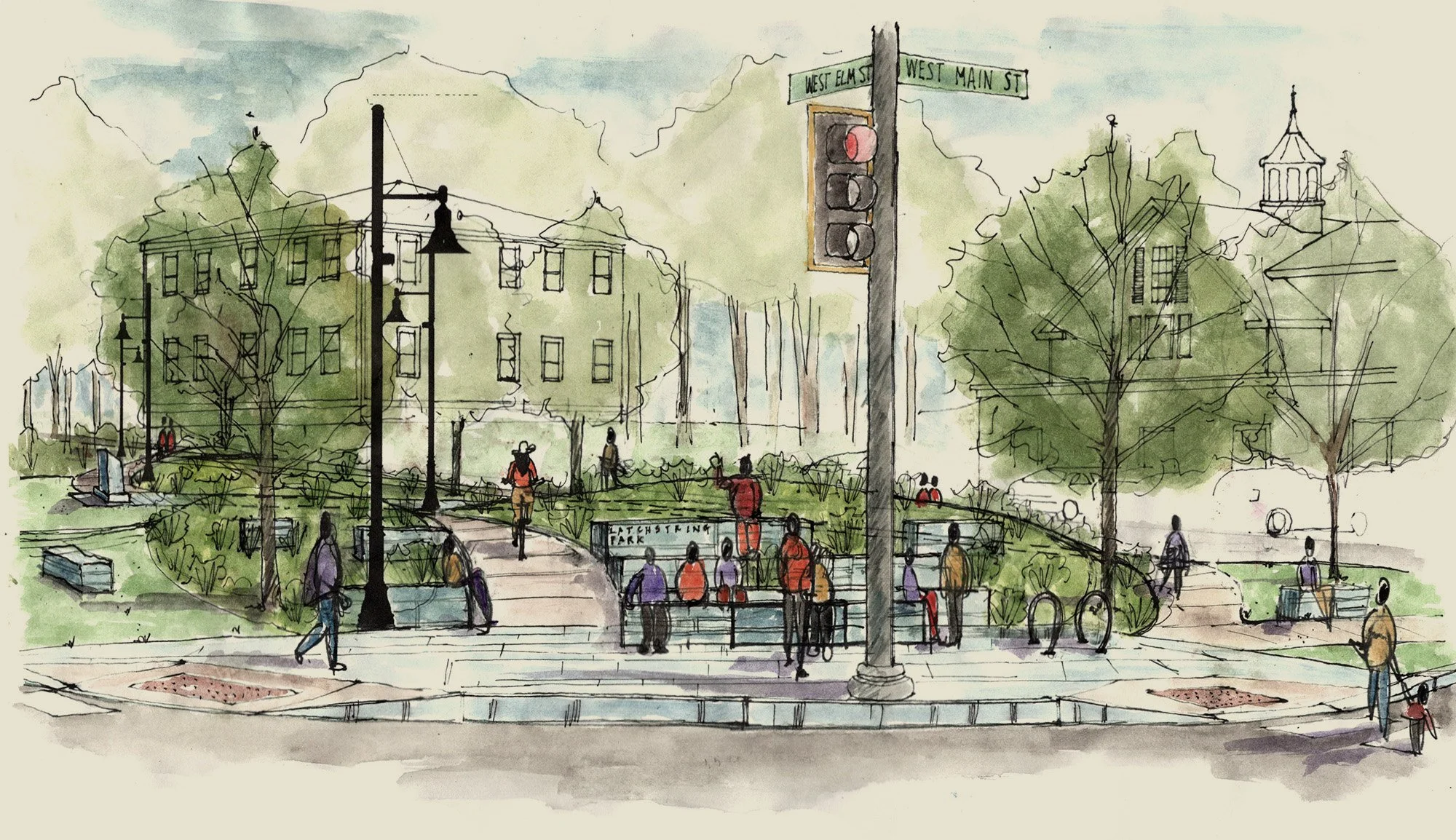
LATCHSTRING PARK / A Neglected Park is Transformed by the Community


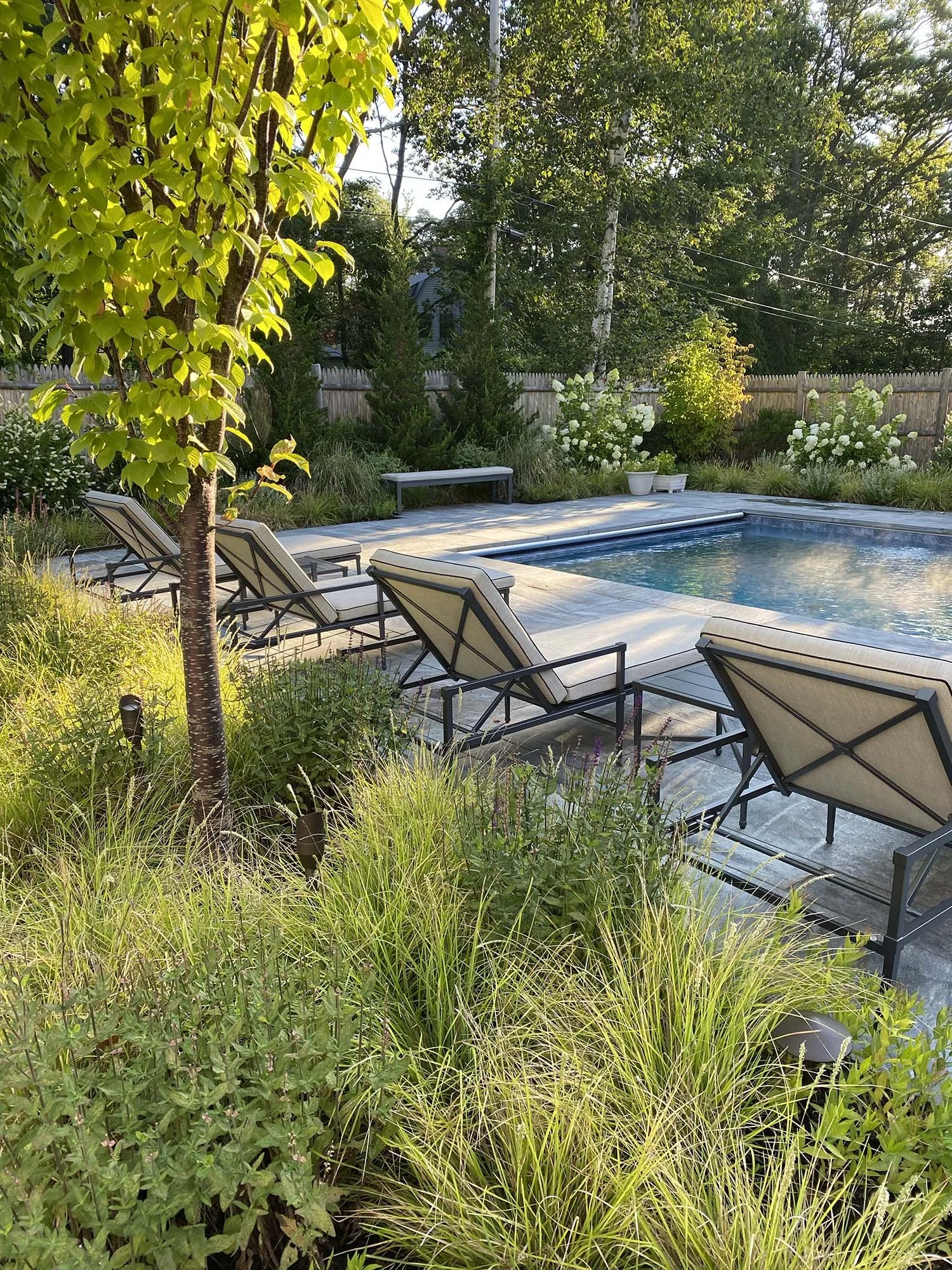
PROUTS NECK / Backyard is Transformed to Oasis


Demolition and clearing of old backyard

View from old backyard to house

View from house to old backyard

Schematic plan options:
A Modern and connected
B Refined and formal
C Spacious and clean

INDIAN POINT / Deepening a Sense of Place
The essential purpose of the landscape project was to realize the potential of an outdoor space while maintaining and enhancing a sense of place.
Located on a peninsula of land jutting into Rangeley Lake, the geography of the residential property is defined by water. A sophisticated craftsman–style defines the architecture of the compound consisting of a main house, cottage, barn, bunkhouse, ‘dry’ boat house, and ‘wet’ boat house. The land is characterized by large expanses of lawn, mature pine trees, and woodlands.
A long–term Master Plan to improve the overall landscape of the property was developed with the clients. The initial phase of work included shoreline stabilization, new and improved pedestrian connections, and, the centerpiece of the project — a fire pit area to hold private wellness retreats and family gatherings. The success of the overall project was due, in part, to a keen awareness of place and a hands on approach to planning, design, and construction.
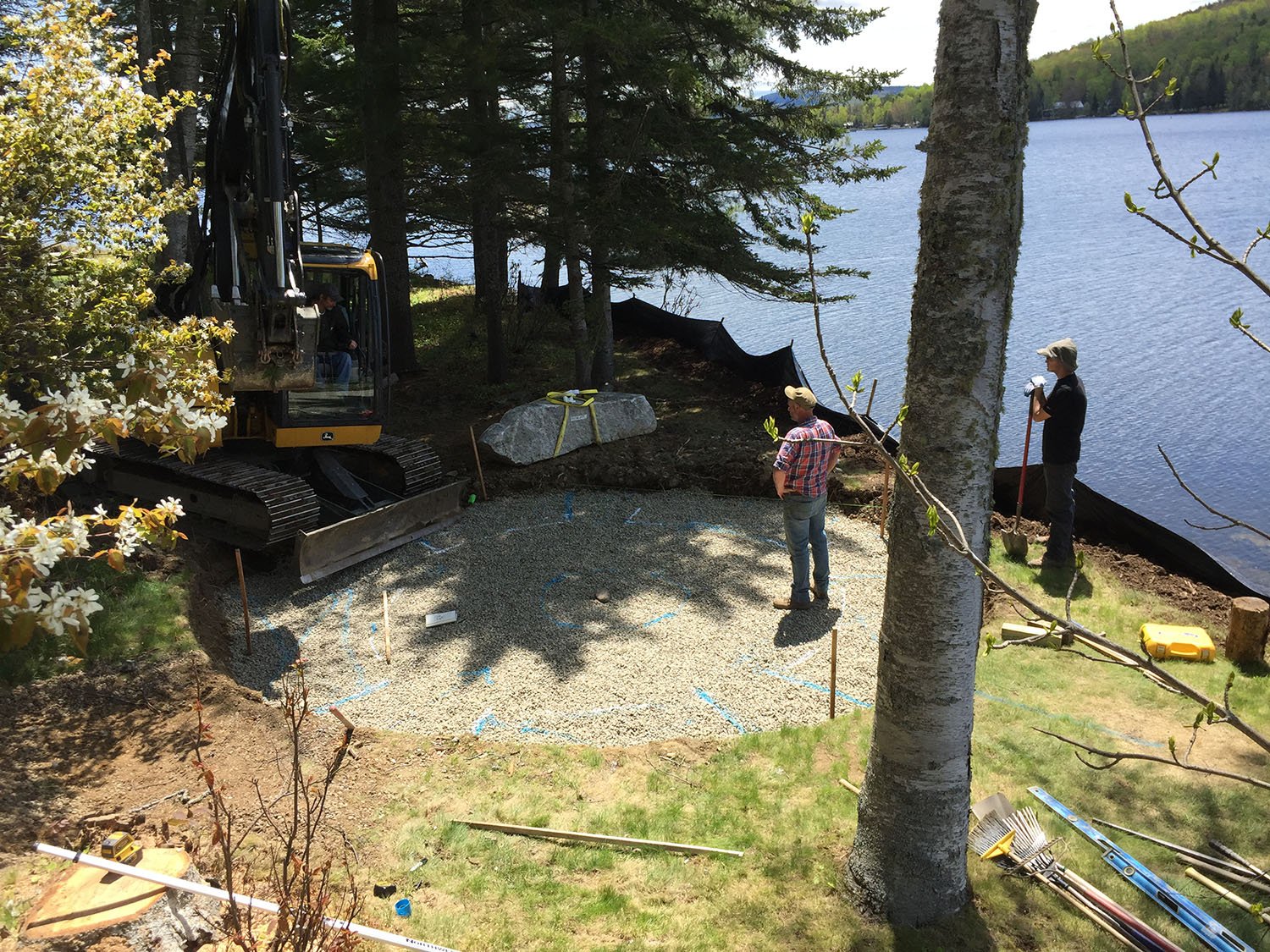
A space of unrealized potential marked the site for the development of a fire pit gathering area. With a hillside and woodlands on one side and water on the other, the area held a comfortable balance of enclosure and openness. Promoting a sense of comfort while within the space, native plantings were installed cradling the space. Species were selected with appropriate mature heights maintaining views to the water. The rugged, expansive surroundings of Rangeley Lake called for a gathering area with a generous disposition of space. Echoing the character of nearby exposed ledge on site, reclaimed quarry tailing stones of a weathered gray were sourced.
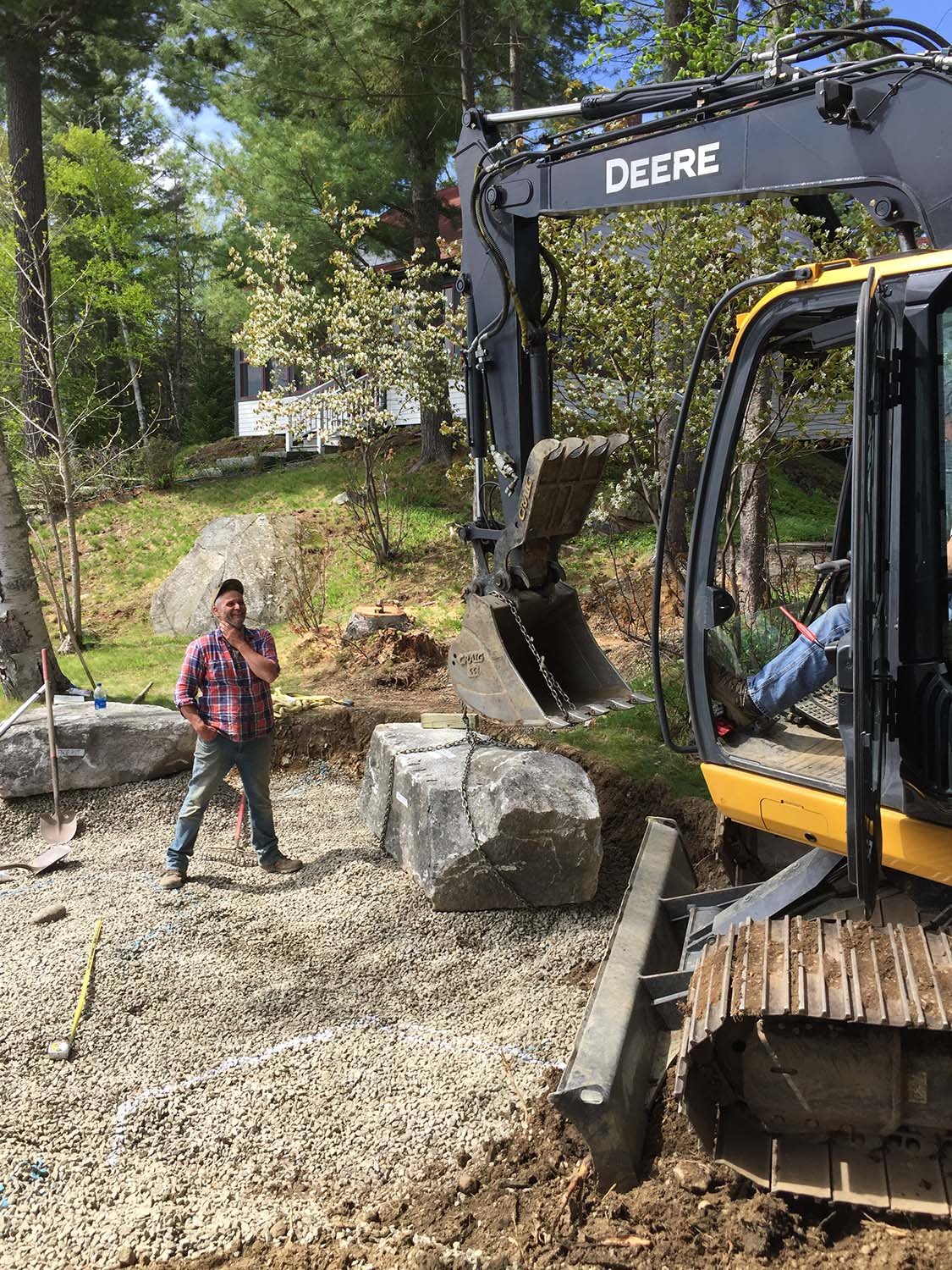
Confirming layout and proportions, the new gathering area was staked prior to construction. Promoting a strong sense of inwardness and social connectivity, the layout of stone blocks, to serve as seating, is radial to a centralized fire pit. Each individual stone was personally hand–tagged at a local quarry. Striving for a “family” of stones, the selected stones all exhibit a similar character, while each unique in their own right. Balancing seating comfort with a rustic character, the stones are blocky in form — not too blocky and not too irregular. Tight field collaborations among excavator, stone craftsmen, and landscape architect played a key role in the manifestation of the space. Six granite block benches, totally over 20,000 pounds, were located providing seating for up to about fifteen people. Quarry tailing slabs were worked to size and fitted together to form the surfacing of the gathering area surrounding the pit. Two quarry tailing blocks were installed upright to bookend a fire wood pile. A custom kindling box, tucked behind the fire wood pile, was designed and built by landscape architect and carpenter.
The accessibility of the fire pit area was improved by forging new and improved connections. A steep gravel pathway was replaced with a stone staircase linking the cottage above. A mulched and pine needled footpath winds its way through a woodland serving as a unique walking experience as well as a new link to the fire pit. A tongue of lawn was maintained connecting in the lower shore area. Local and state permitting was achieved by replacing an existing fireplace in disrepair at the shore edge and stabilizing the shoreland by replacing an eroding hillside of lawn with native groundcover plantings.
Stonework by Matt Carter of Green Island Stonework
Demolition and Excavation, by Corey Baker
Photography by Joshua Tompkins








FERN / A Contemporary Landscape in the Maine Woods
with Richardson & Associates
architecture by Norelius Studio
construction by Cold Mountain Builders
The purpose of the residential project was to deepen the connection of this family with this place. Approached from a distinctly modern point of view, the project seamlessly integrates a wooded landscape with the client’s aesthetic preferences and modern lifestyle. An intensely hands–on, collaborative partnership with the architect, builder, contractors, and client was instrumental in this achievement.
The primary site structures — main house and garage / auxiliary living — are centrally located and accessible from a winding gravel driveway. A vehicular gate marks the threshold between a public road and private driveway. The gate was inspired by those at state parks but streamlined in form and with state–of–the art functionality. A spacious arrival motor court accommodates client and visitor parking needs. Auxiliary 'pull–off' parking spaces are inconspicuously located along the driveway. A ‘writer’s retreat’, a modest structure nested deep in the woods at the edge of the property, is accessible only by a narrow footpath.
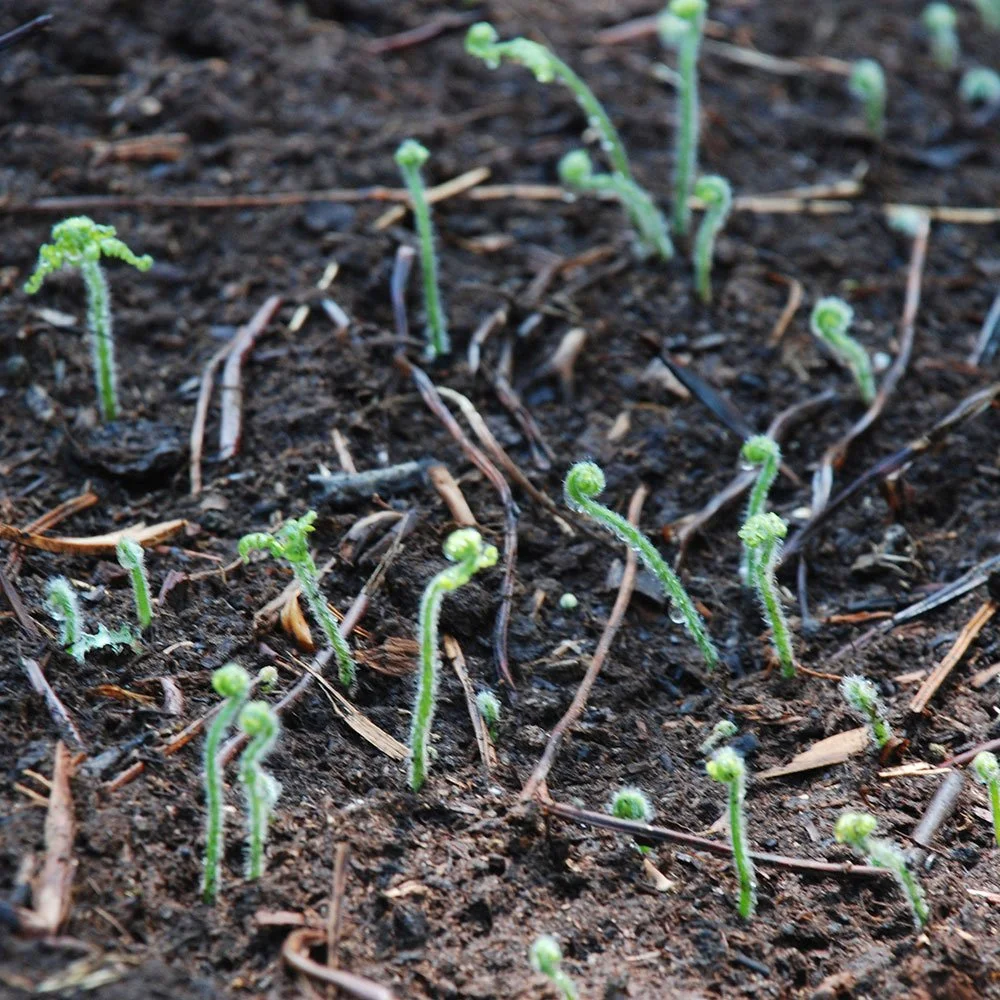
The inspiration for the landscape drew cues from the site’s character and histories. We did not attempt to replicate nature, rather existing vegetation served as a framework for a fresh, newly defined planting palette. Plant species diversity was restrained while quantities were generously applied. Large masses of native hay scented fern, Dennstaedtia punctilobula, concentrate near outdoor living areas and dissipate outward into the woods. Foundation relics from an old inn on the property inspired the use of stone walls as site organization elements.
Fulfilling desires of modern day life, a variety of passive and active recreation spaces were developed. The primary structures form a courtyard–like enclosure for the main outdoor gathering terrace. Flexible in size, it is capable of supporting large entertainment functions or smaller, intimate gatherings. Adjunct to the terrace is a fire pit for evening gatherings. Large boulders, sourced off site, and native trees Paper birch, Betula papyrifera, and Yellow birch, Betula alleghaniensis, define and scale the space. At the front of house, a recreation lawn veils a septic field while drawing in sunlight. A network of trails connects key places while expanding recreational opportunities. A series of stone and timber steps facilitate circulation through the hillside woodland site. Timber planks bridge streams pulling one closer to moist, moss–laden banks. A tree house, a central feature for children, is located within a hemlock canopy cantilevered and lofted over a ravine.
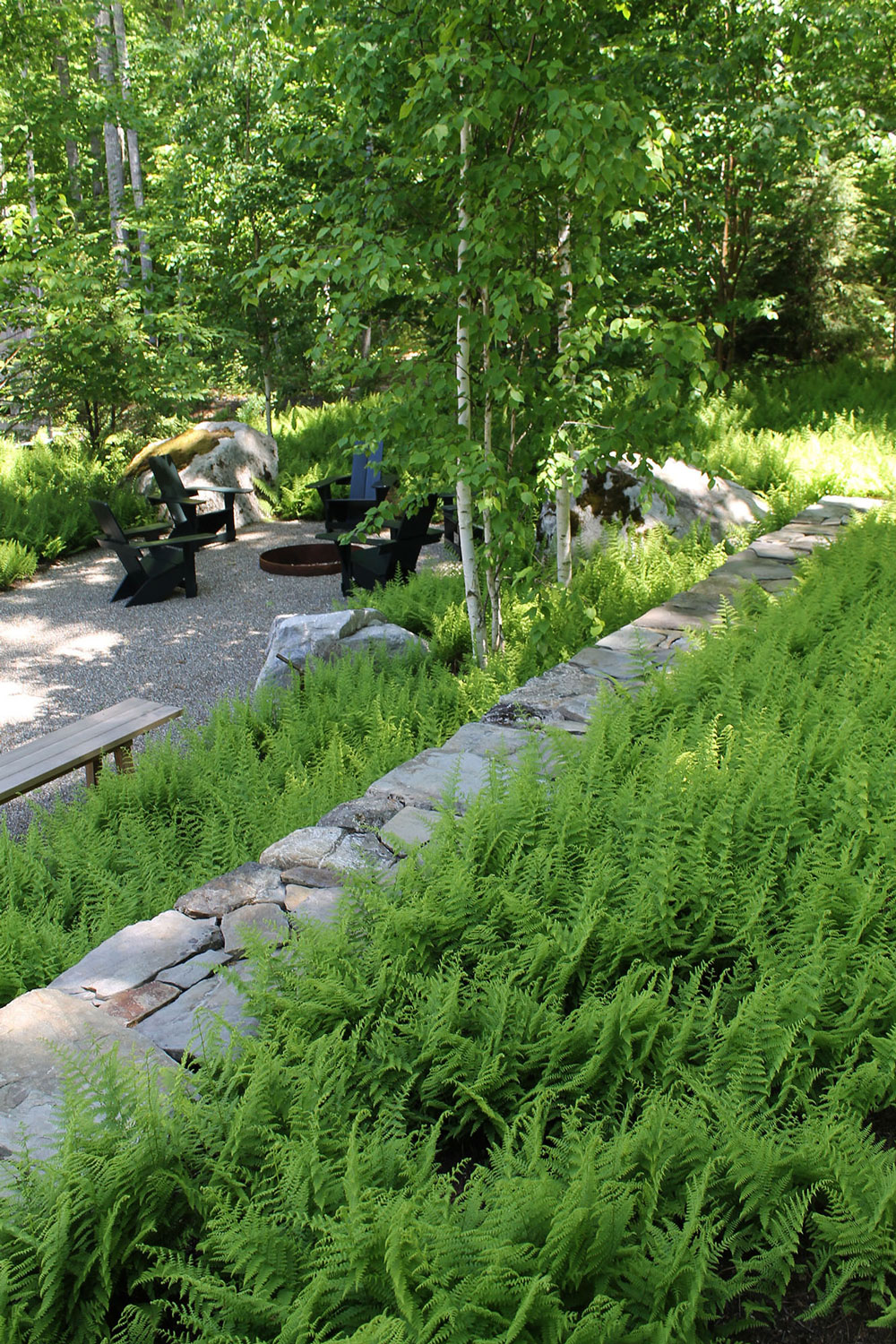
A fire pit gathering area nests into the edge of the main terrace.

An informal arrangement of large boulders defines the edge of the fire pit area. A simple, steel ring welcomes firewood.
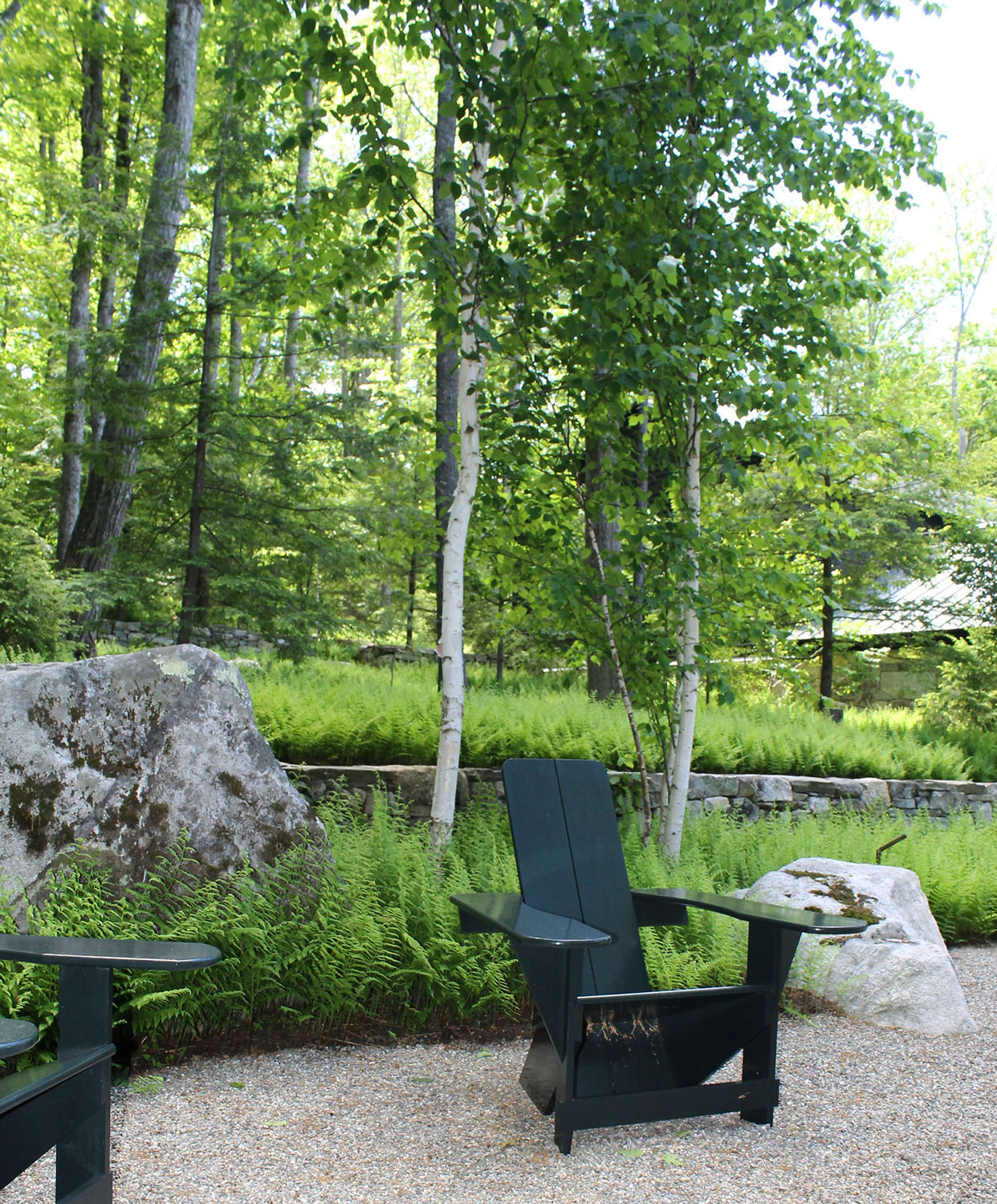
Fieldstone walls, extending across the hillside, serve as site organization elements.

The green hillside rolls down to meet the main terrace.

A copper light fixture unobtrusively emerges out of the ferns.

The main terrace meets a lush, green hillside. A simple foot wash is located at the base of the stone–cladded building.

A hillside footpath of natural cleft, stone steps.

A small, private gathering space is surrounded by native ground covers and punctuated by paper birch, Betula papyrifera.

A woodland footpath slices through green carpets of hayscented fern, Dennstaedtia punctiloba, and connects with an outbuilding.

A small gathering space overlooks a sunny recreational lawn veiling a septic field below.
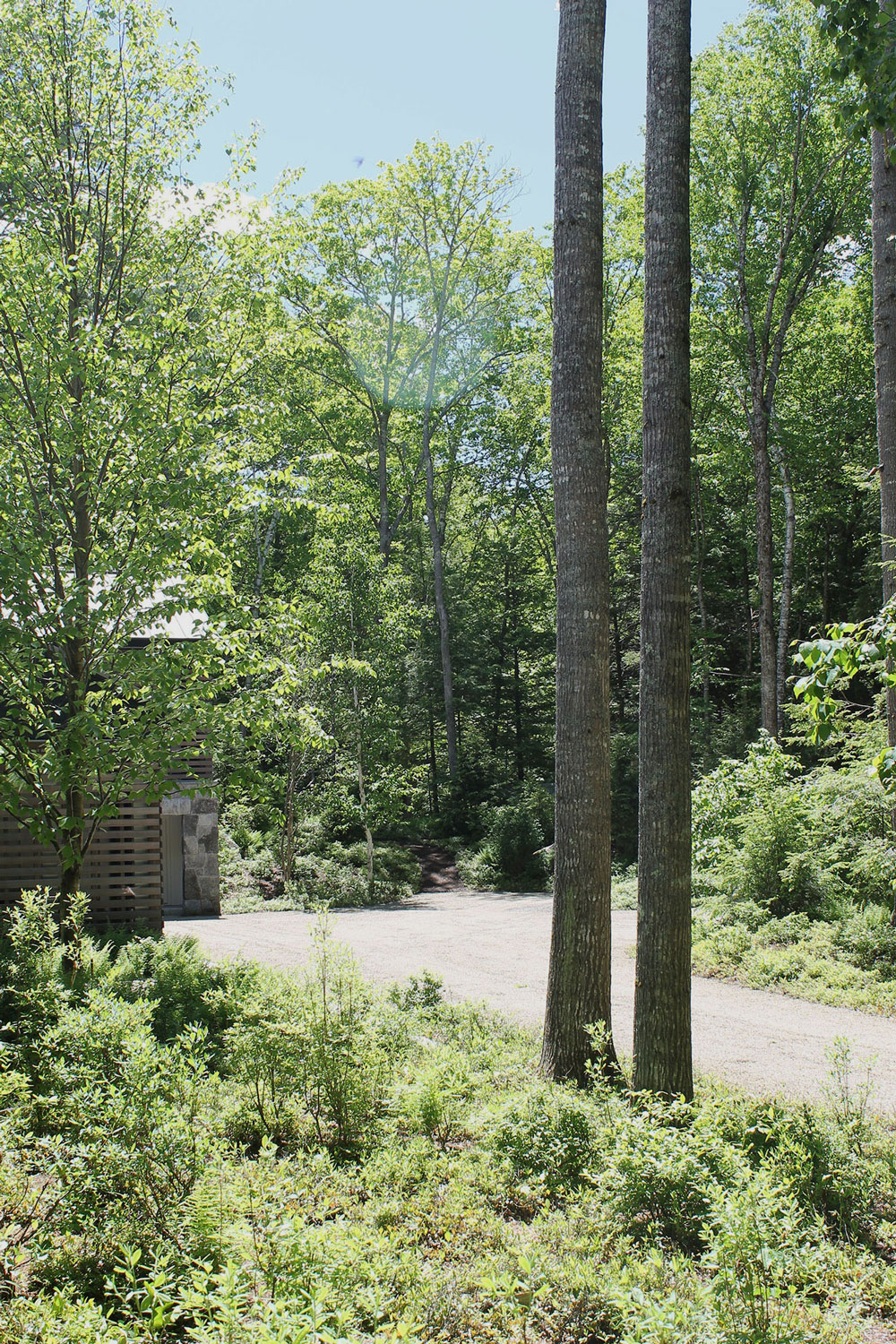
A pair of existing trees, protected through construction, mark the transition from driveway to motor court.

Slipping between two buildings, a connector links the motor court with the main terrace. Yellow birch, Betula alleghaniensis, and lush ground covers take hold.

A vehicular gate, inspired by those found at Maine state parks, but streamlined in form and with state–of–the art functionality.
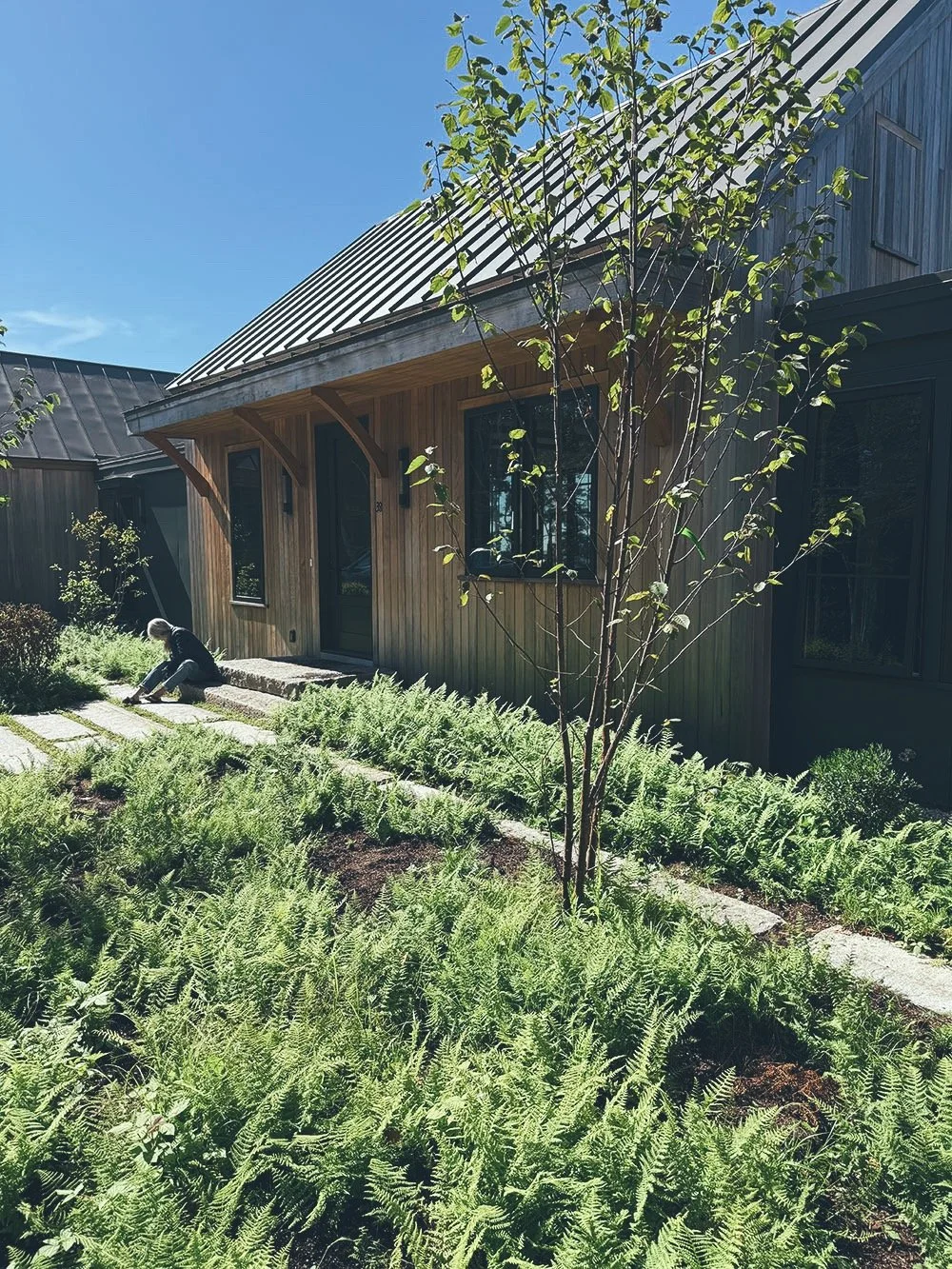
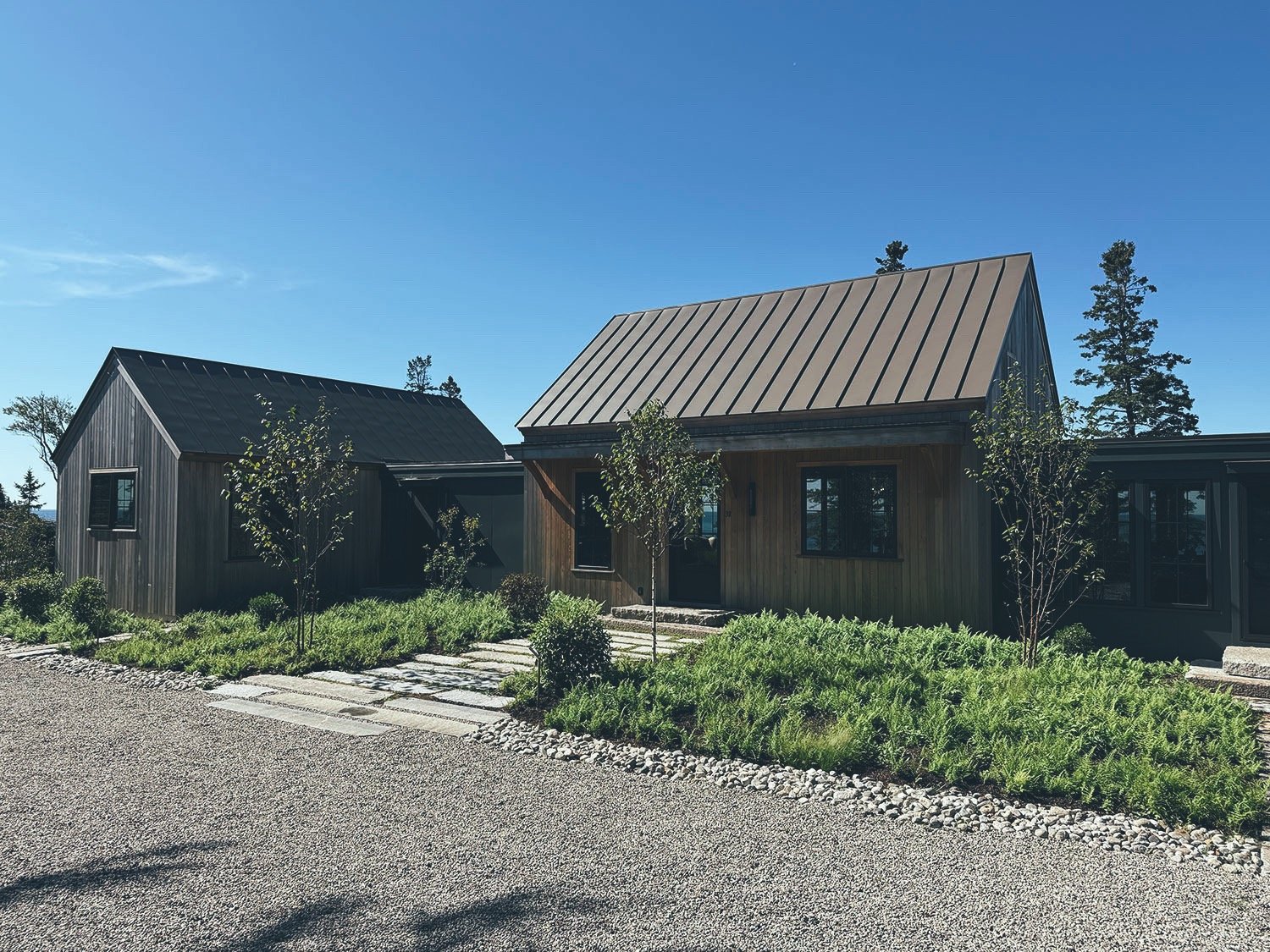
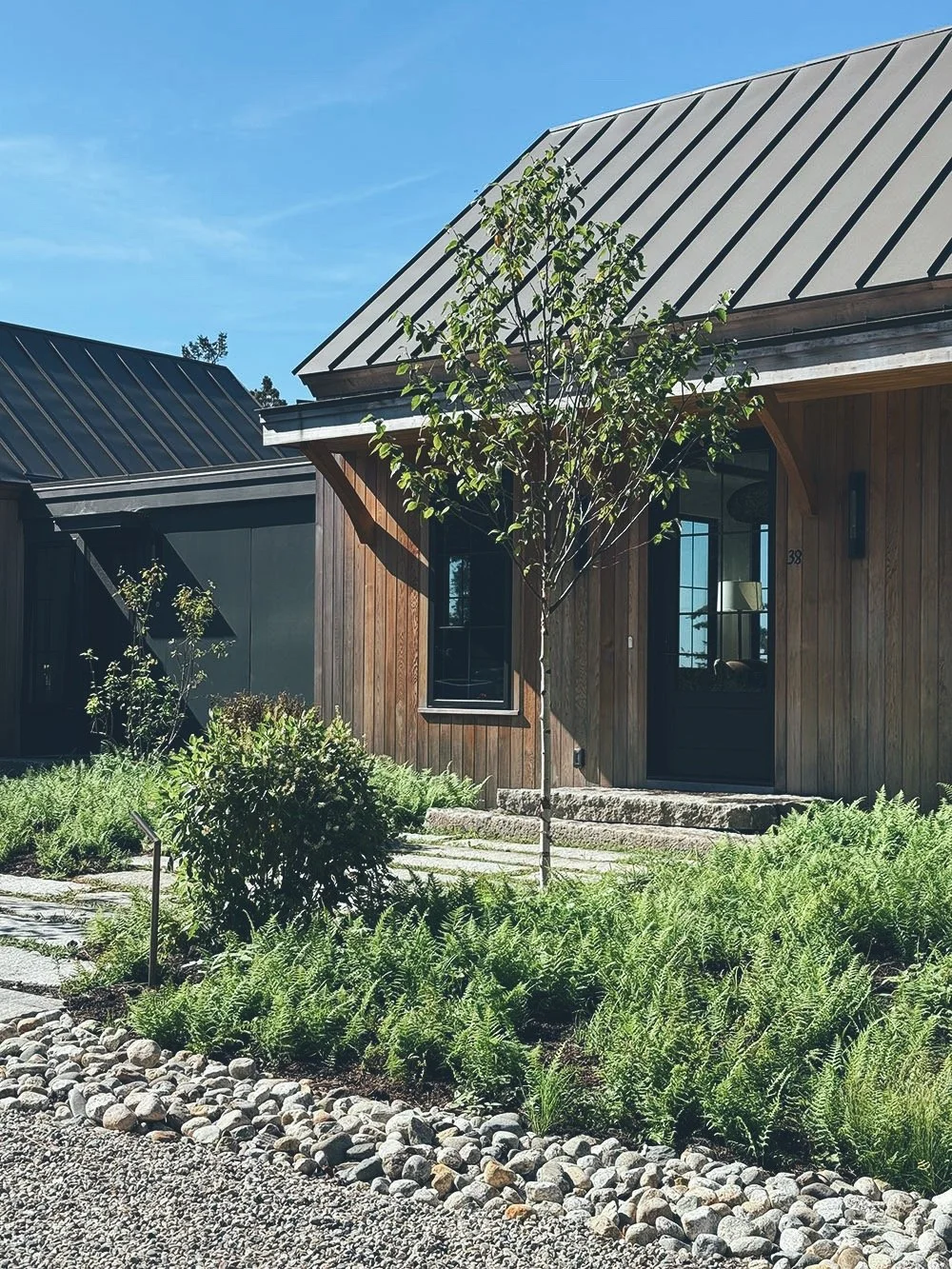
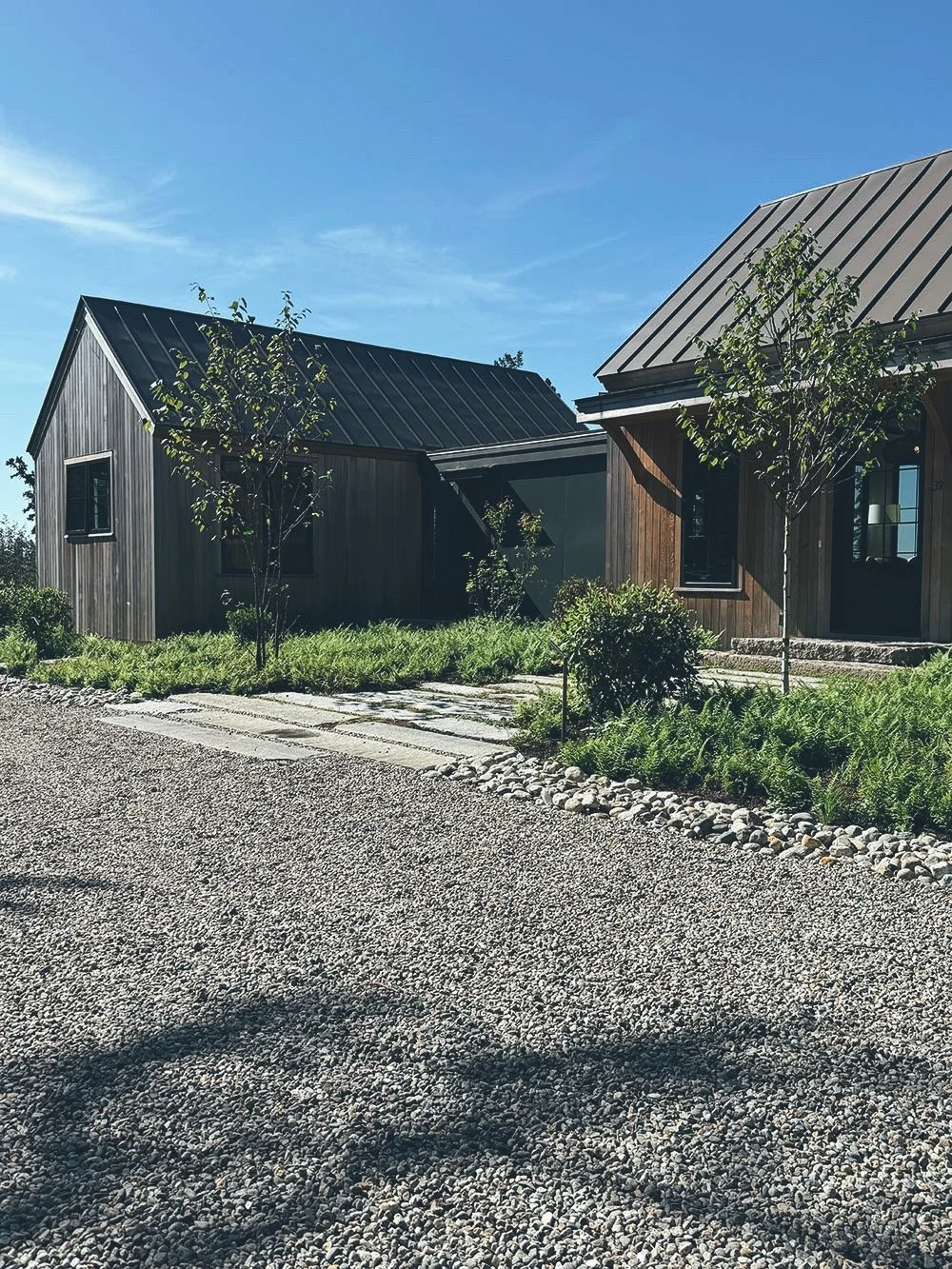
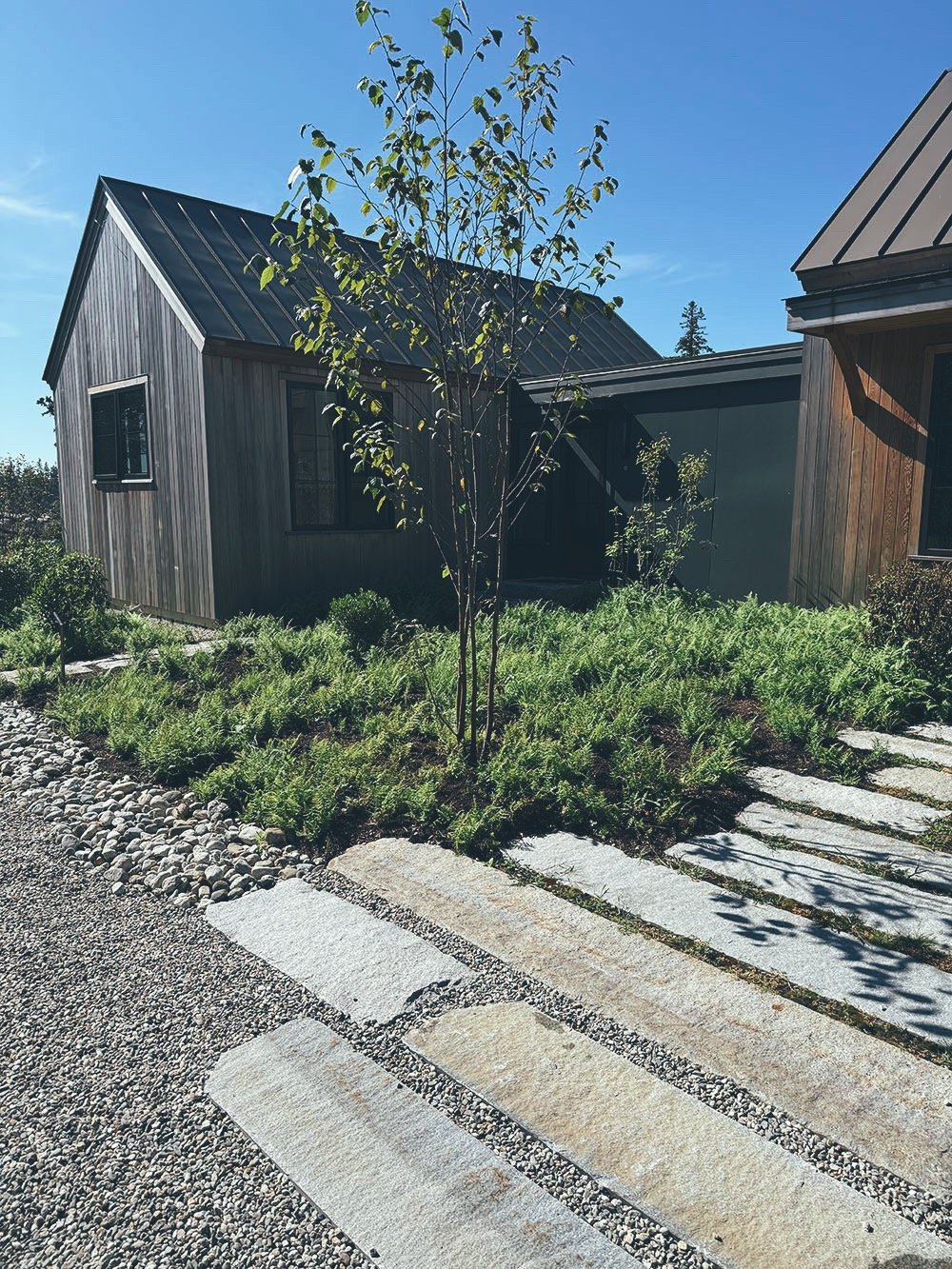
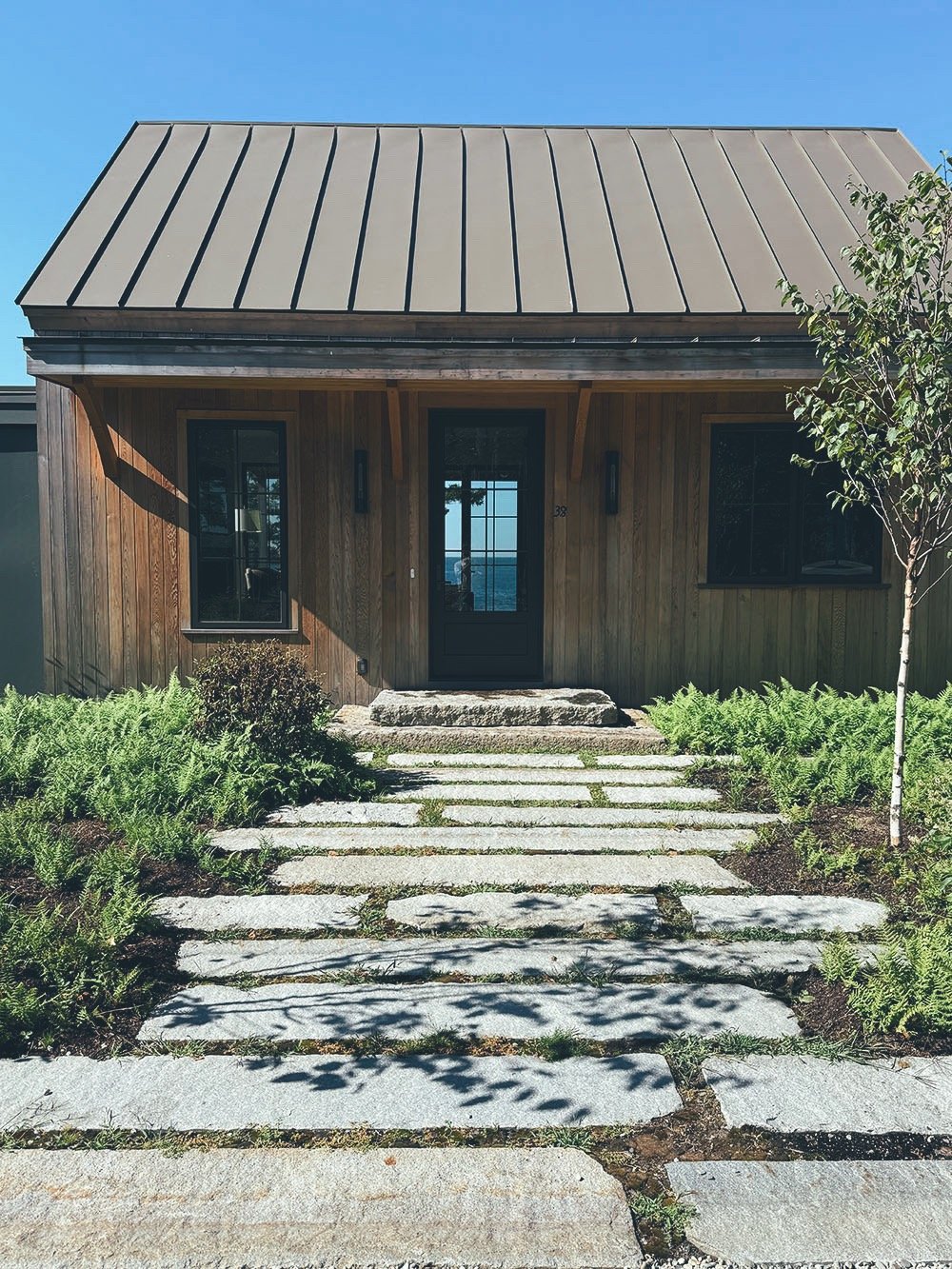
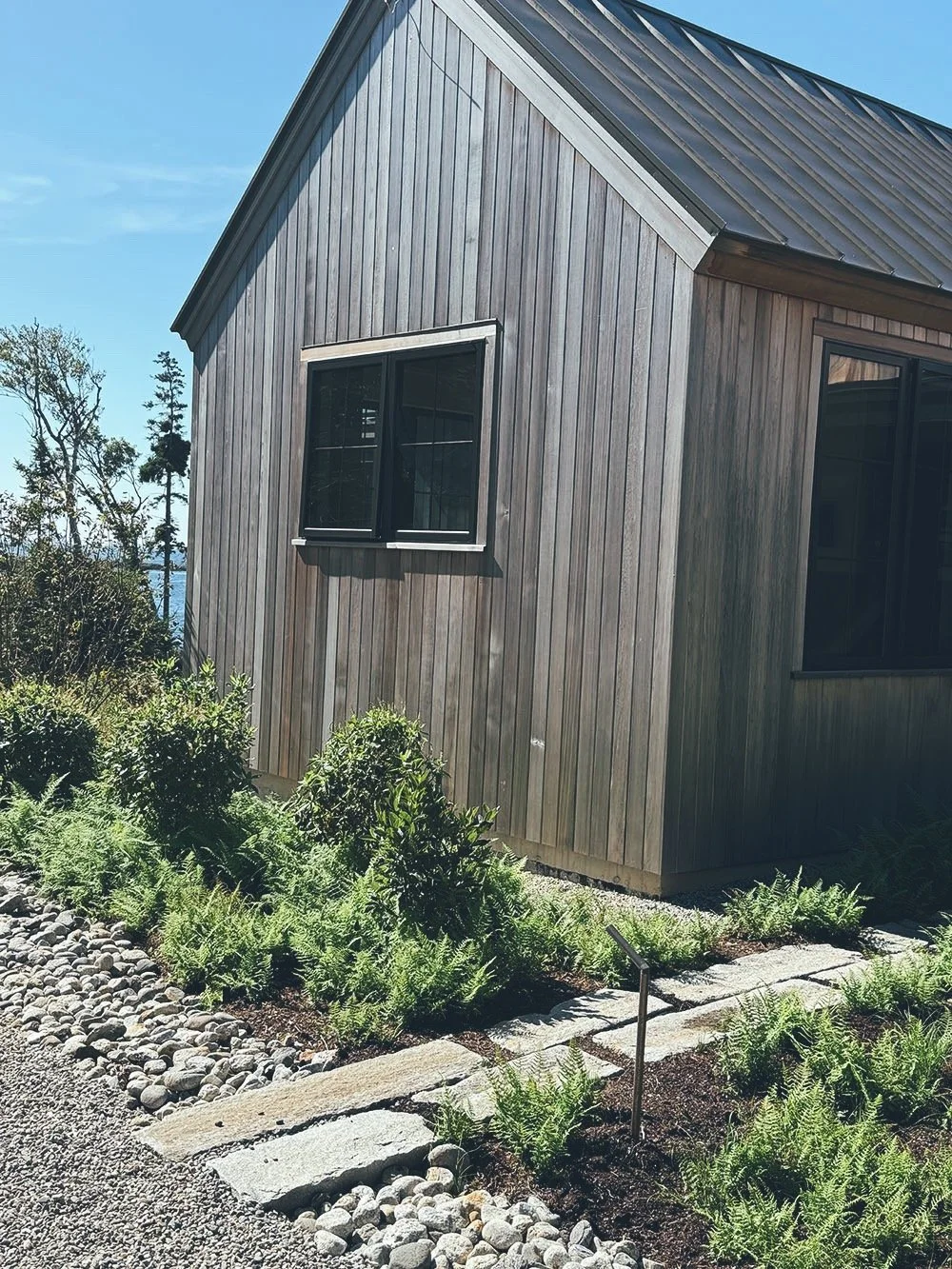
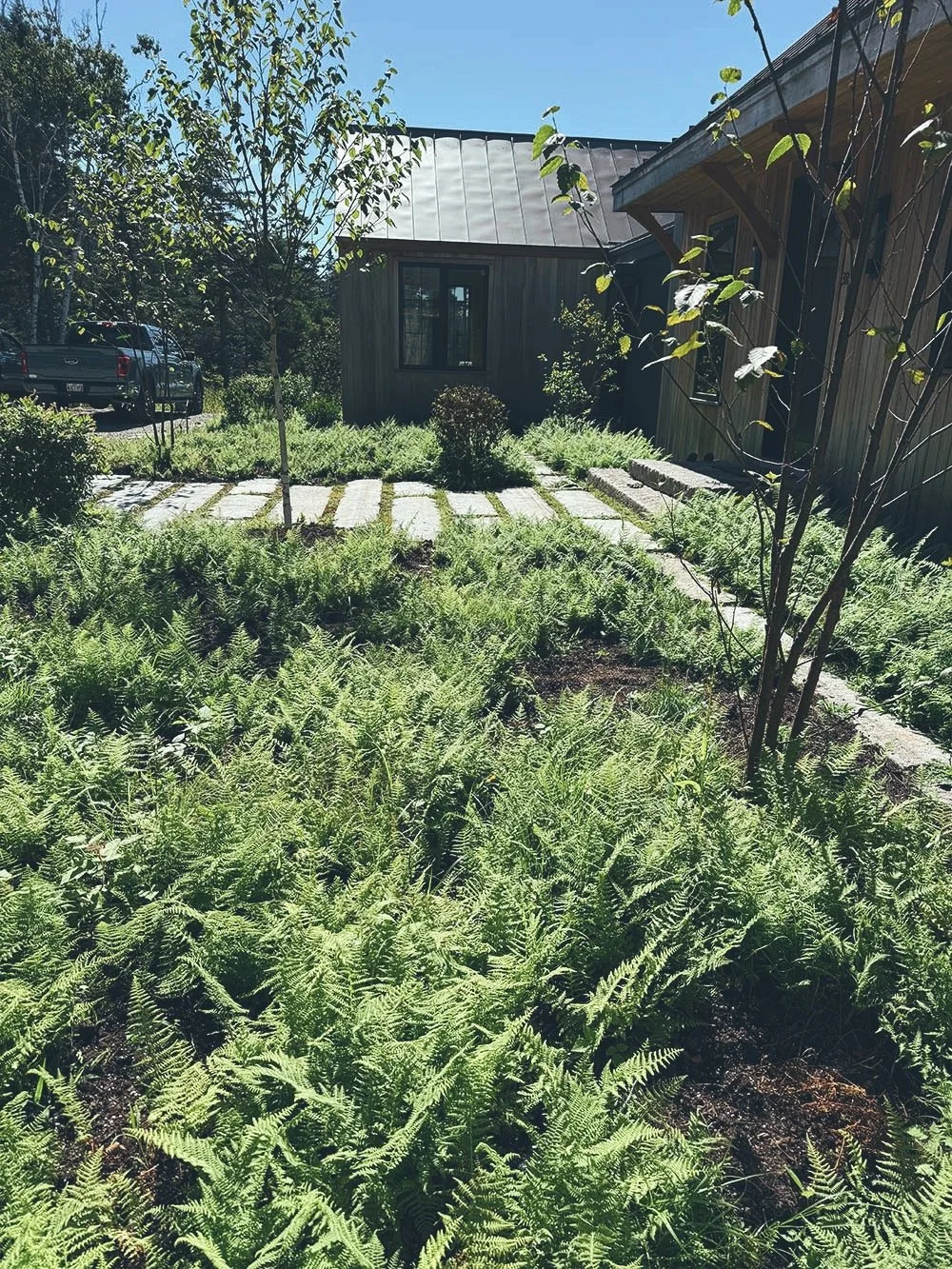
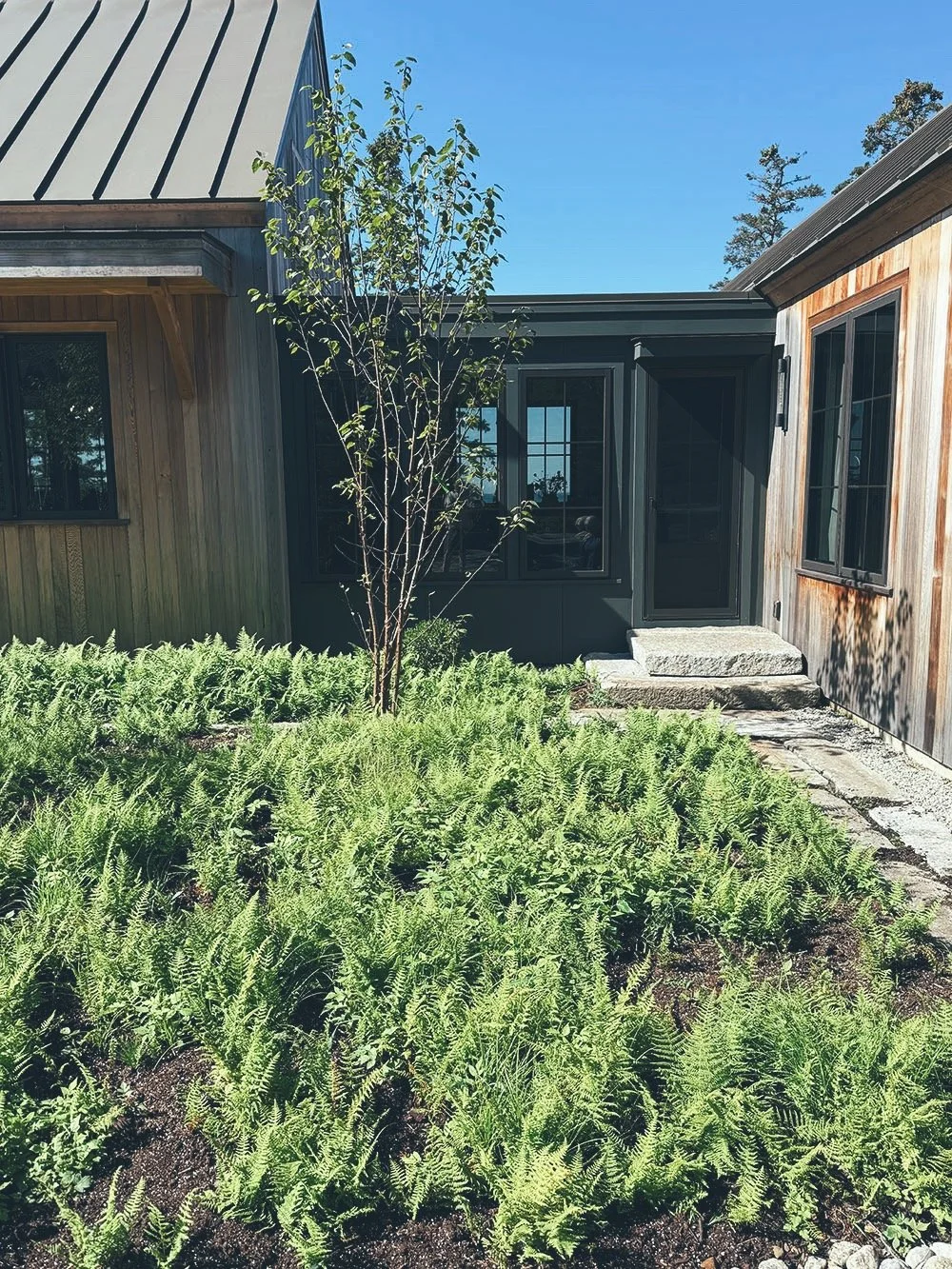
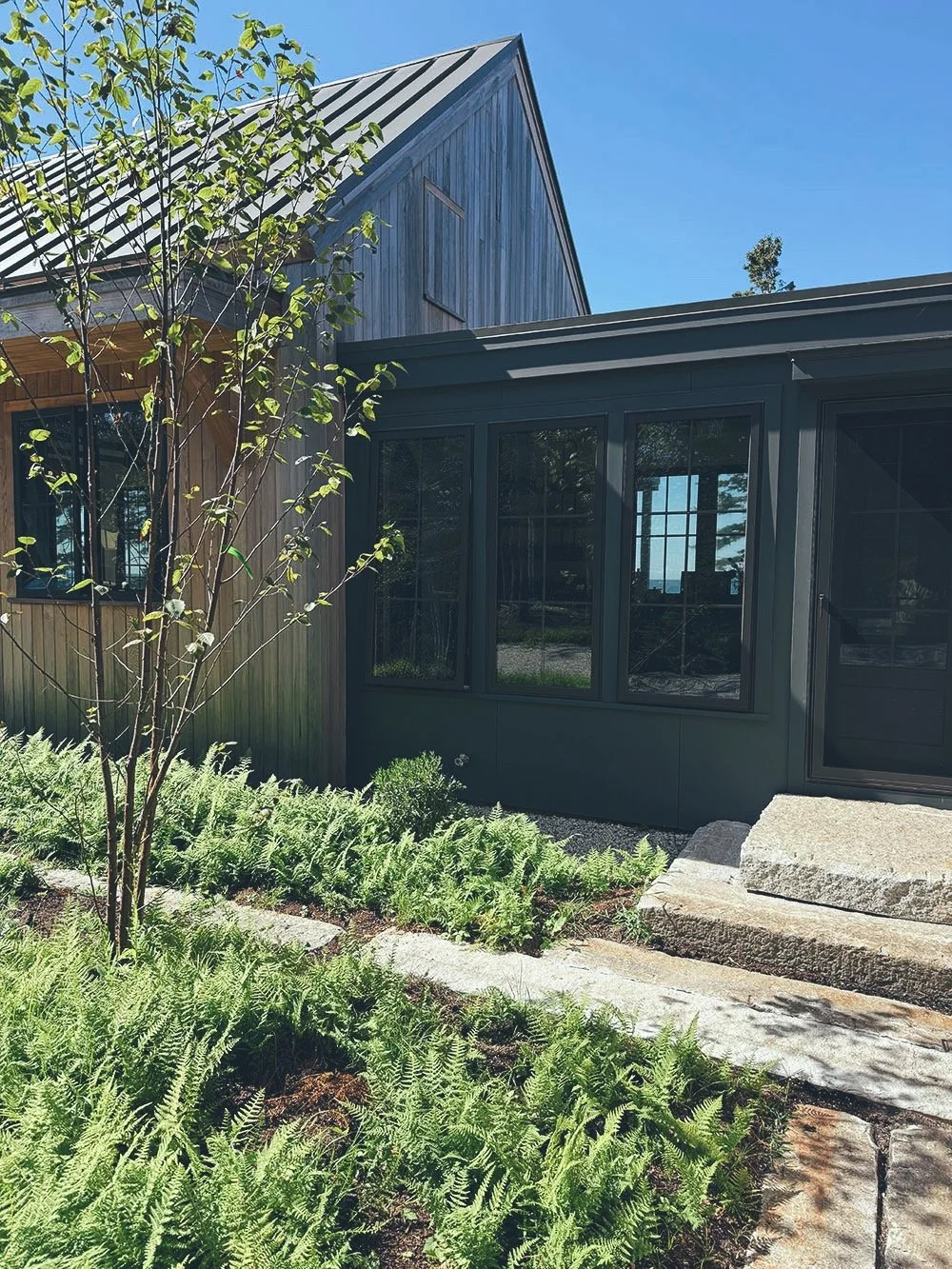
FIR PATH / A verdant courtyard welcomes one in
architecture by Waltman Architectural Design
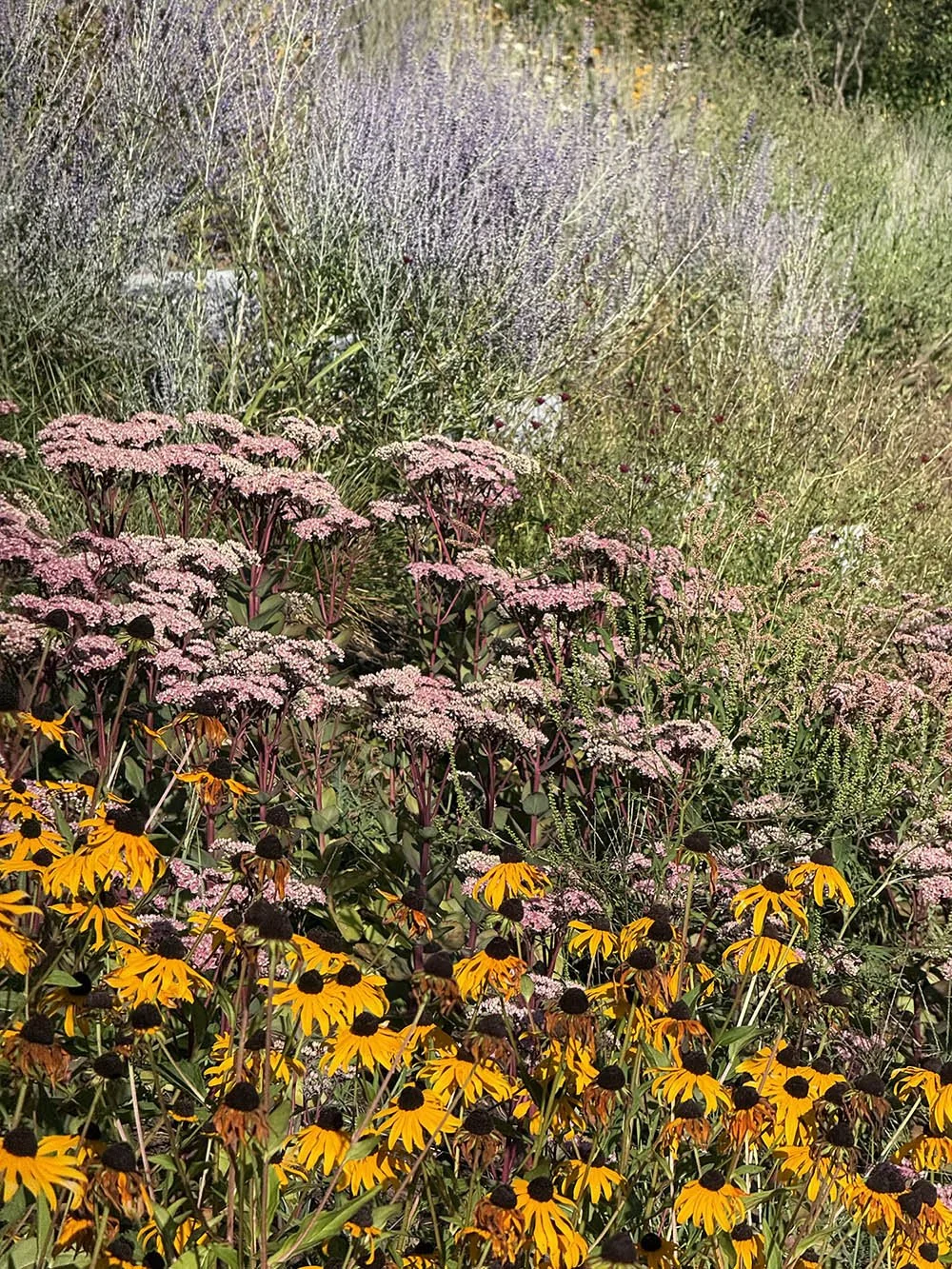
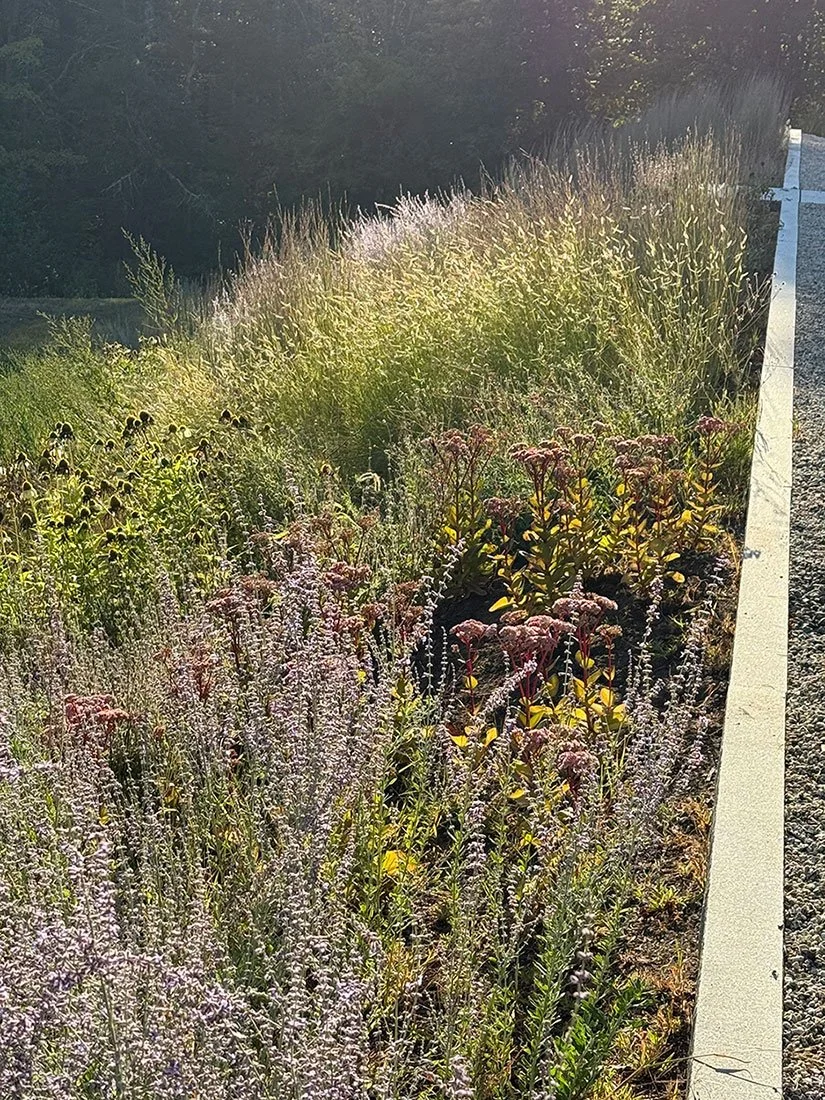
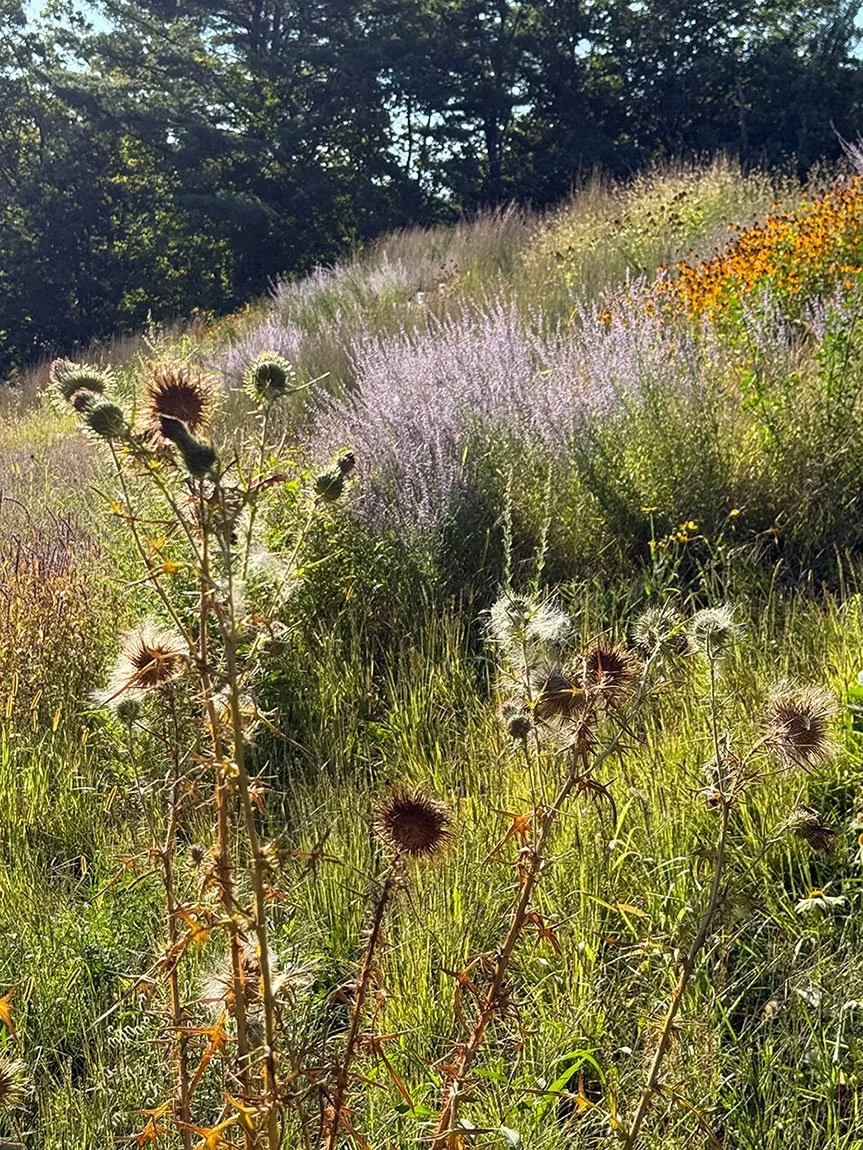
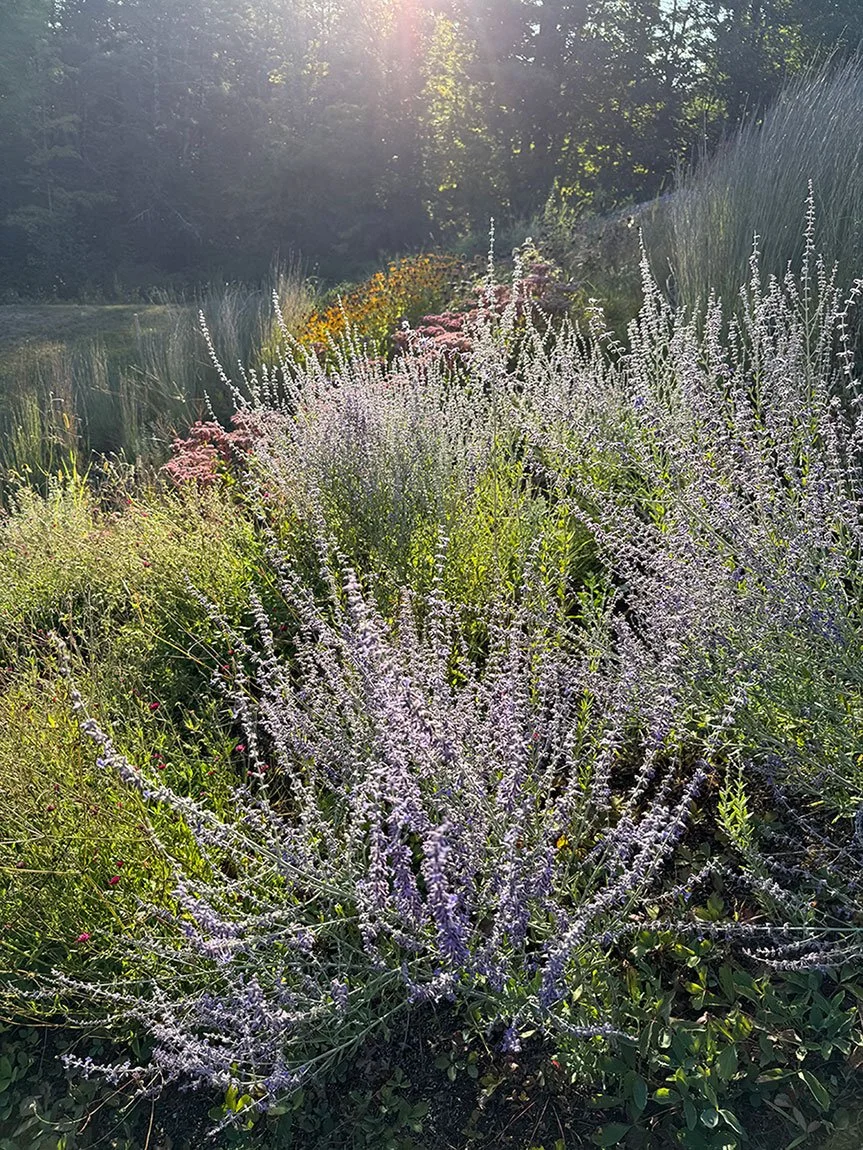
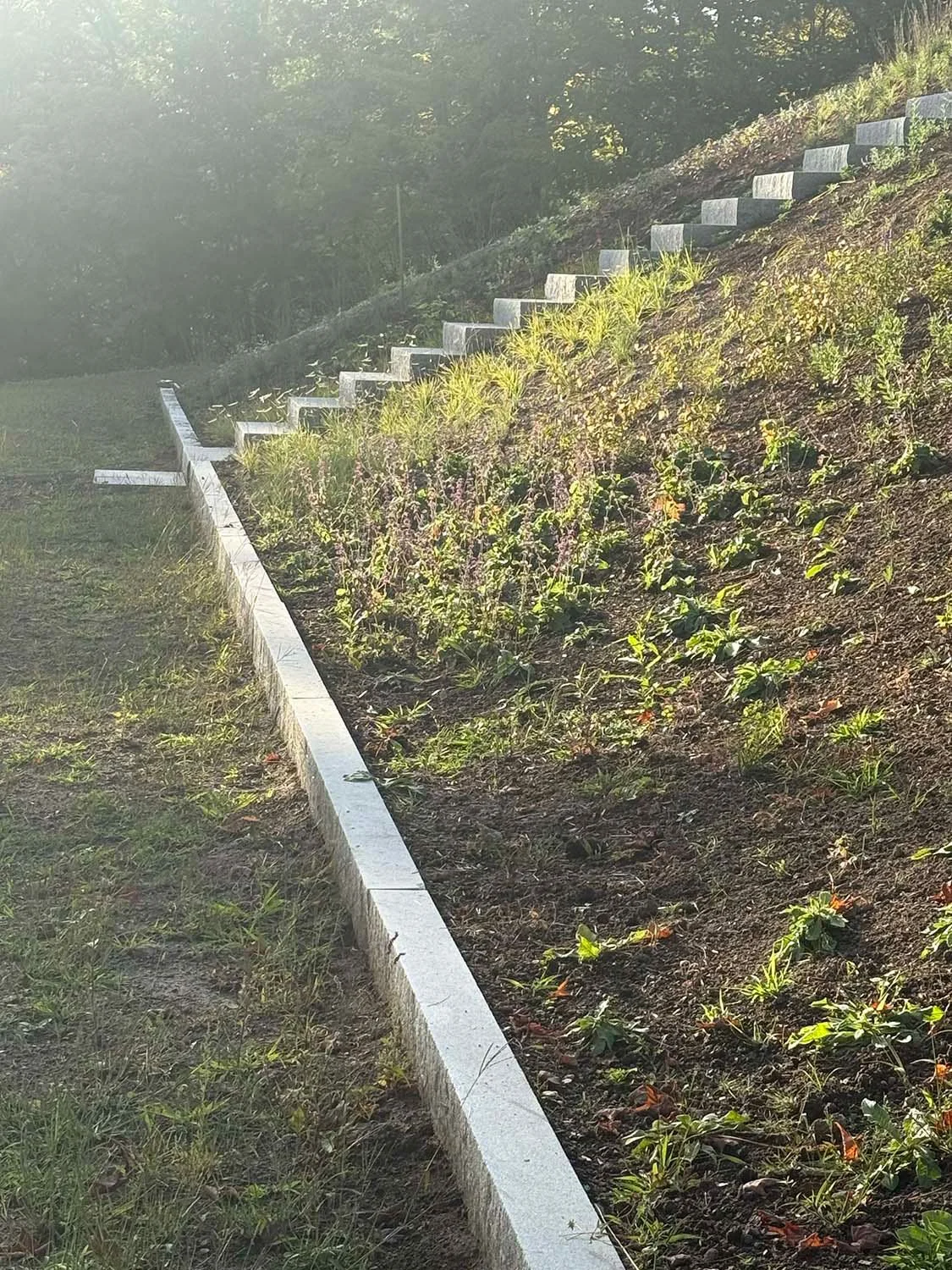
LITTLE RIVER / A barren hillside is brought to life with plants


POJAC POINT / A Contemporary Garden: Between Architecture and Landscape
with Katherine Field
Metalwork fabrication / installation by Colin Butler
Photography by Joshua Tompkins
The purpose of this project was to physically and visually strengthen the connection between the client and their outdoor environment. A strong sculptural composition of the landscape is fully realized throughout all four seasons — whether viewed outward from within the home or physically occupied. Early collaborations with the client revealed their penchant for contemporary art and the desire to express it through the physical transformation of their property.
The centerline of a key window of the house, established the ‘spine’ of the project and a tether between building and landscape. The upper terrace, abutting the home, is defined by shade and a sense of enclosure. Large metal panels infilled with stainless steel mesh scrims break up the façade and define space for quiet seating. The transparency through the scrims varies in response to light and movement, producing dynamic effects. The precise, formal layout of metal arches and a granite wall are juxtaposed by informal arrangements of low plantings. Stepping down and emerging into sunlight, metal arches are rhythmically spaced along a path, guiding the way to the center of a bosque of forty red maples, Acer rubrum ‘Red Sunset’ surrounded by pasture. A sculpture, at the terminus of the path, allures.

The garden is organized and structured as a linear spine. A sight line from the upper, shady terrace to the lower, sunny field.


The centerline of a key window establishes the formal layout of the project.

An overhead pergola heightens a sense of enclosure within the upper garden terrace.

Layout and material harmony of arch, light, paver, and pea stone.

Flamed, 'Jet Mist' granite steps.
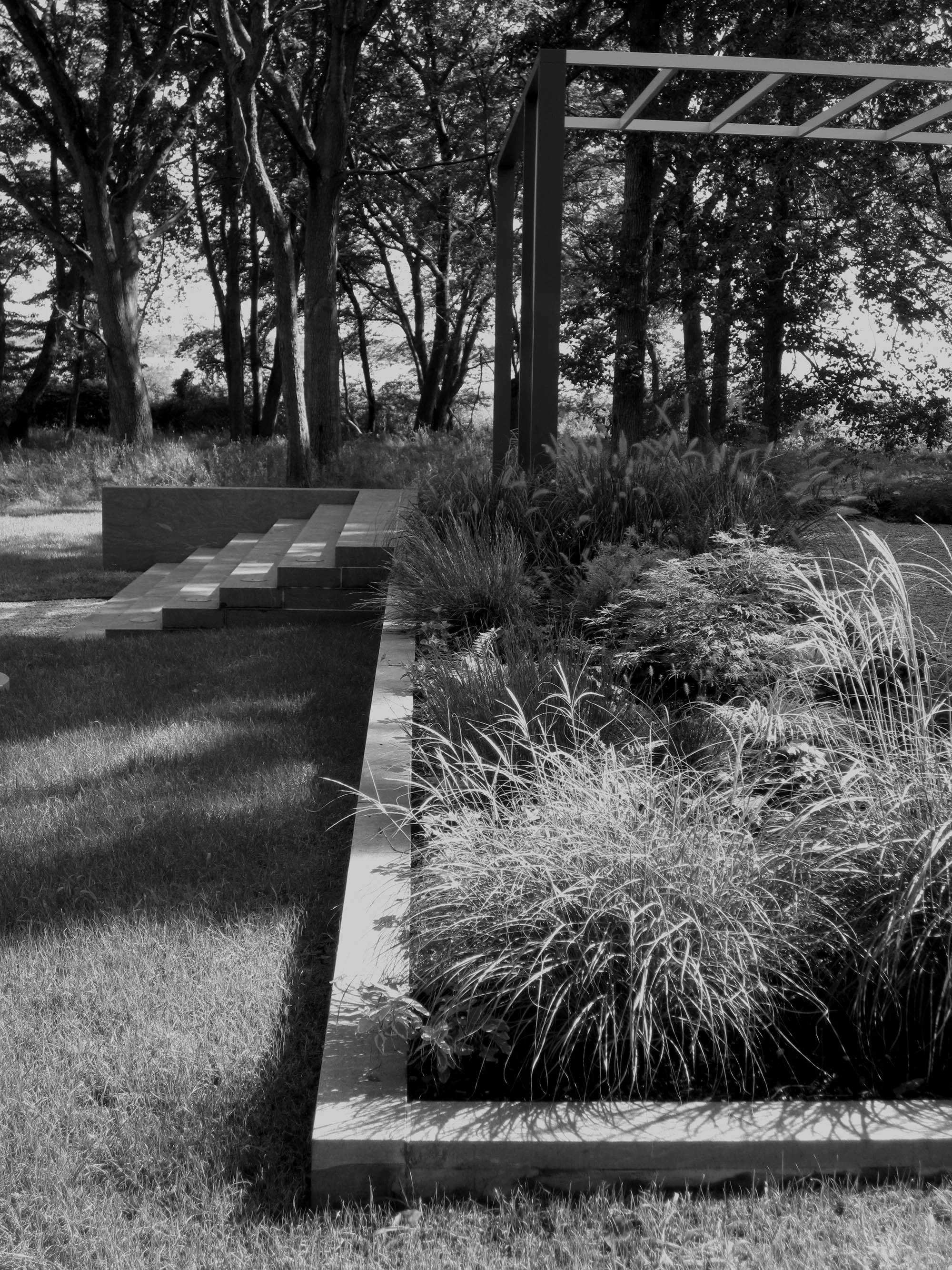
Informal arrangements of plantings juxtapose the formal layout of granite and metalwork.
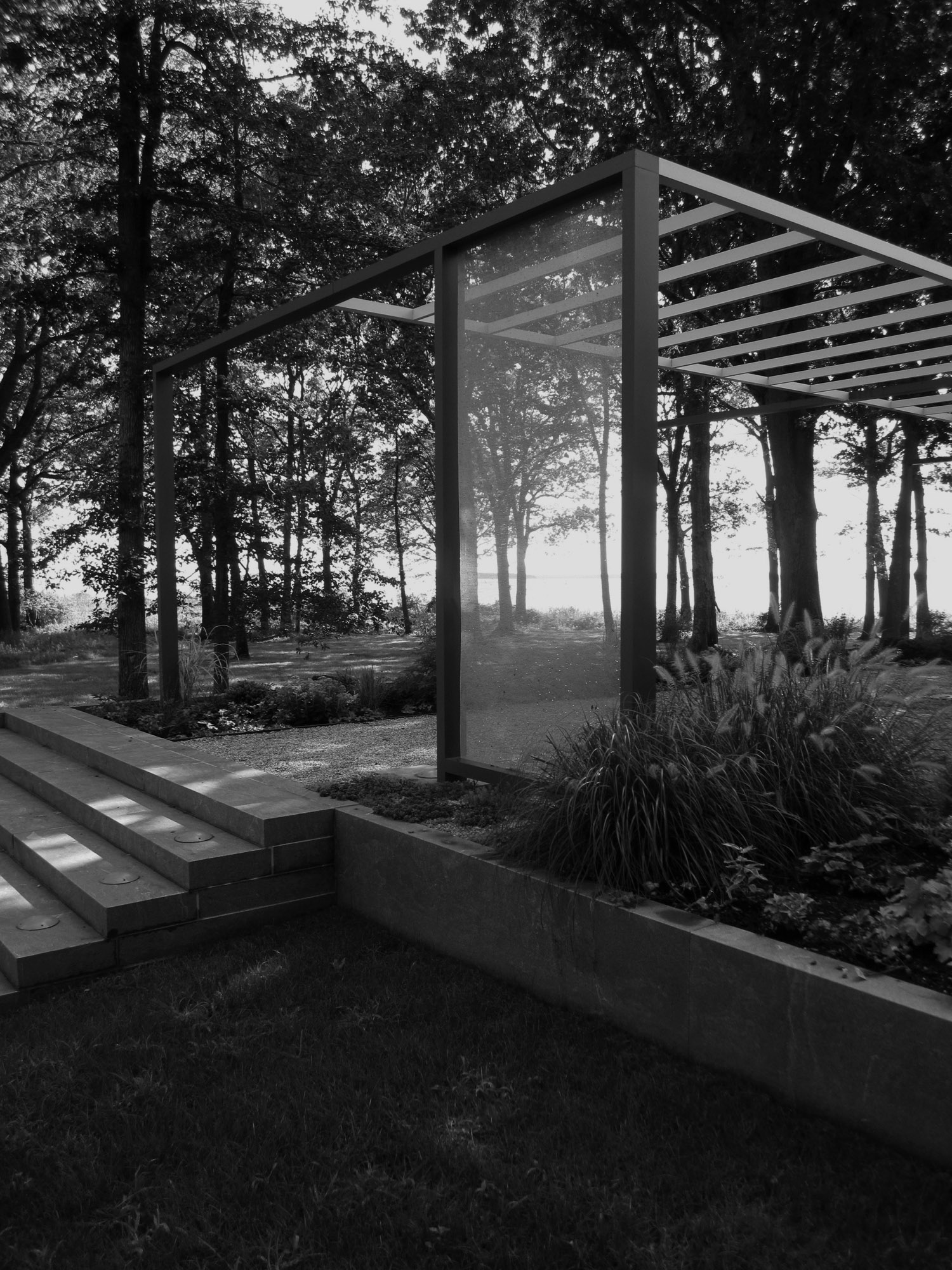
A play on transparency through scrims of stainless steel mesh.

From the upper terrace to the field beyond.

The interplay of light and shadow with structure.


The textural contrast between mesh and arch.
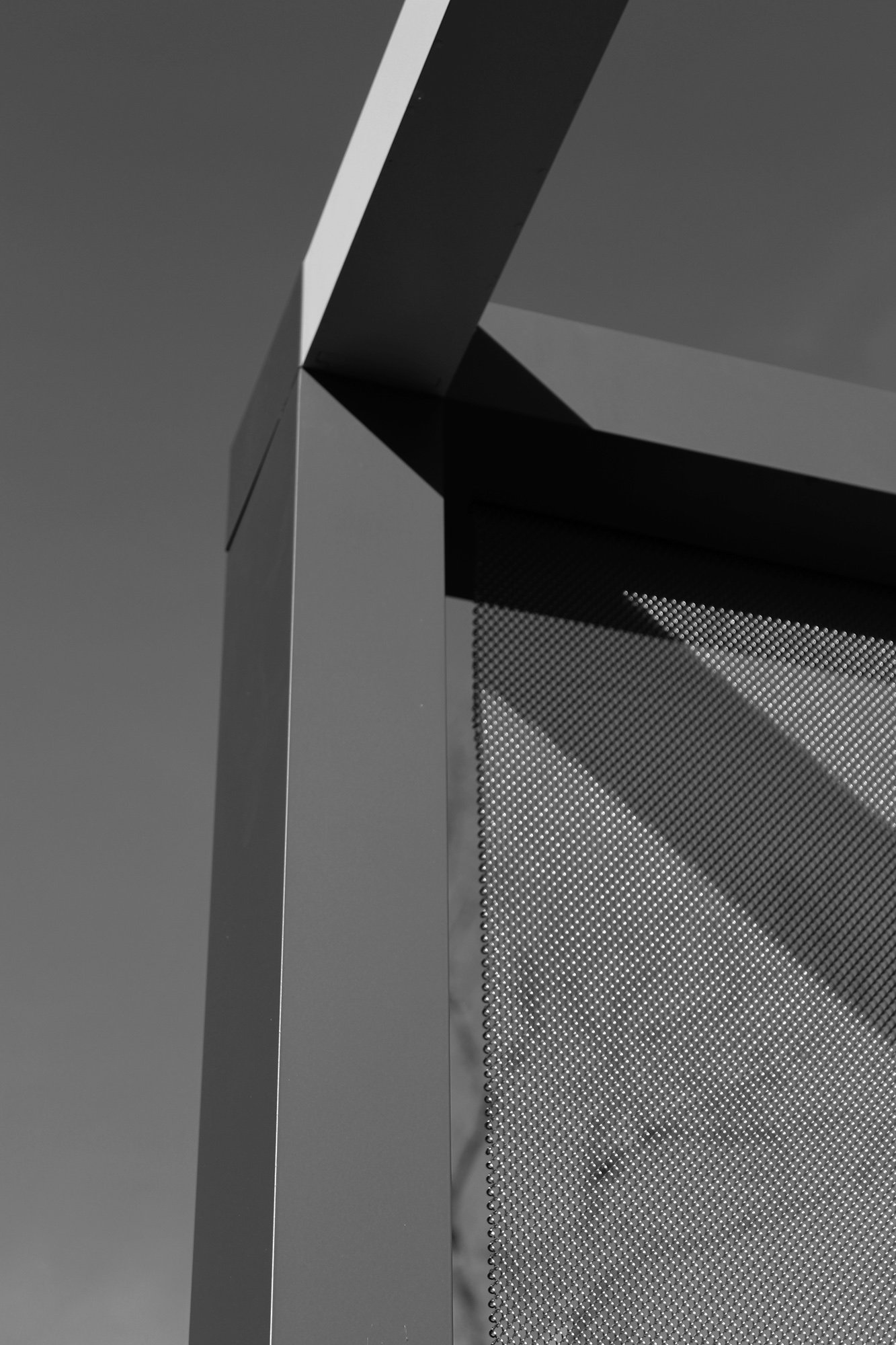

A procession of arches spurs movement along a footpath.

Arches emerging into sunlight.

A field of red maples.

A sculpture, located within a field of trees, allures.


Construction details
Arch leg footing and leveling plate details
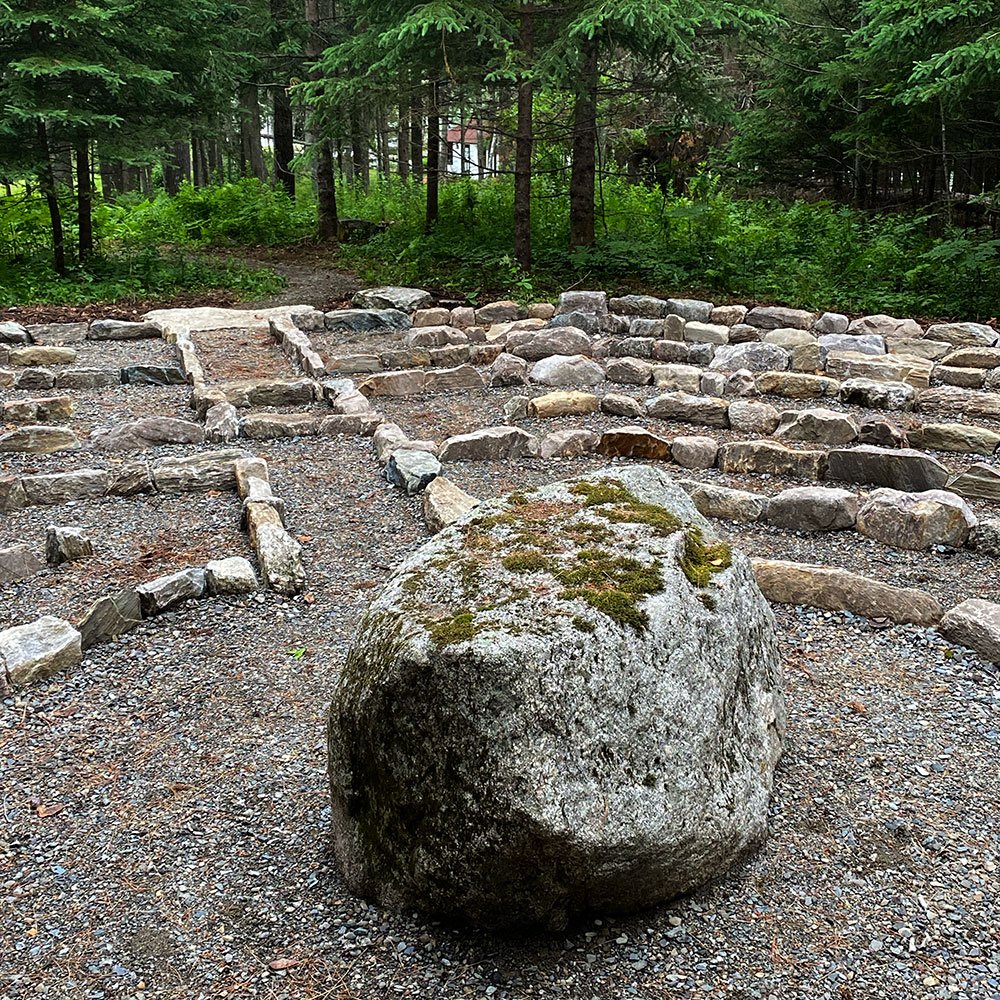
QUOSSOC / Hidden in the forest lies a meditative labyrinth
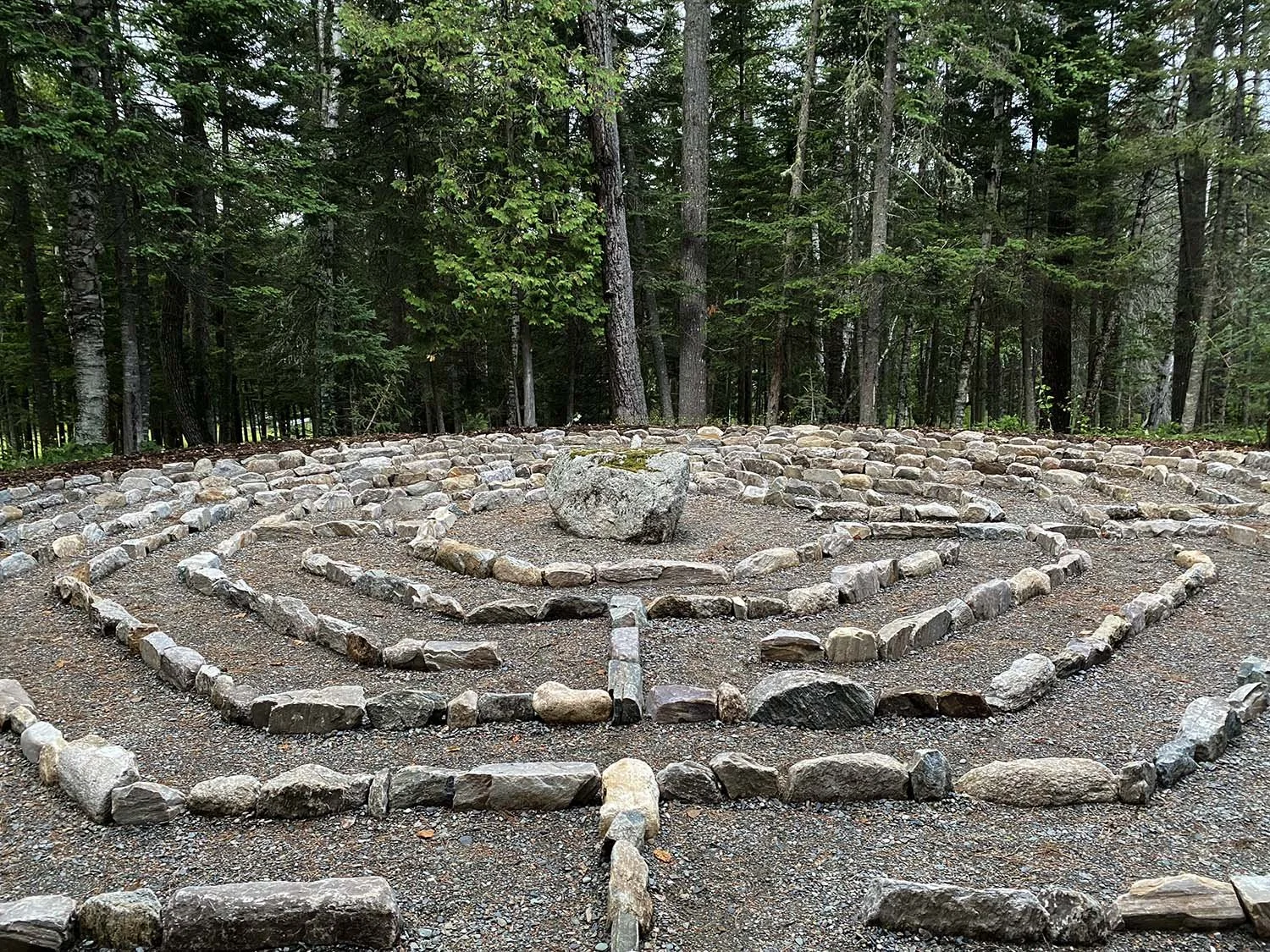
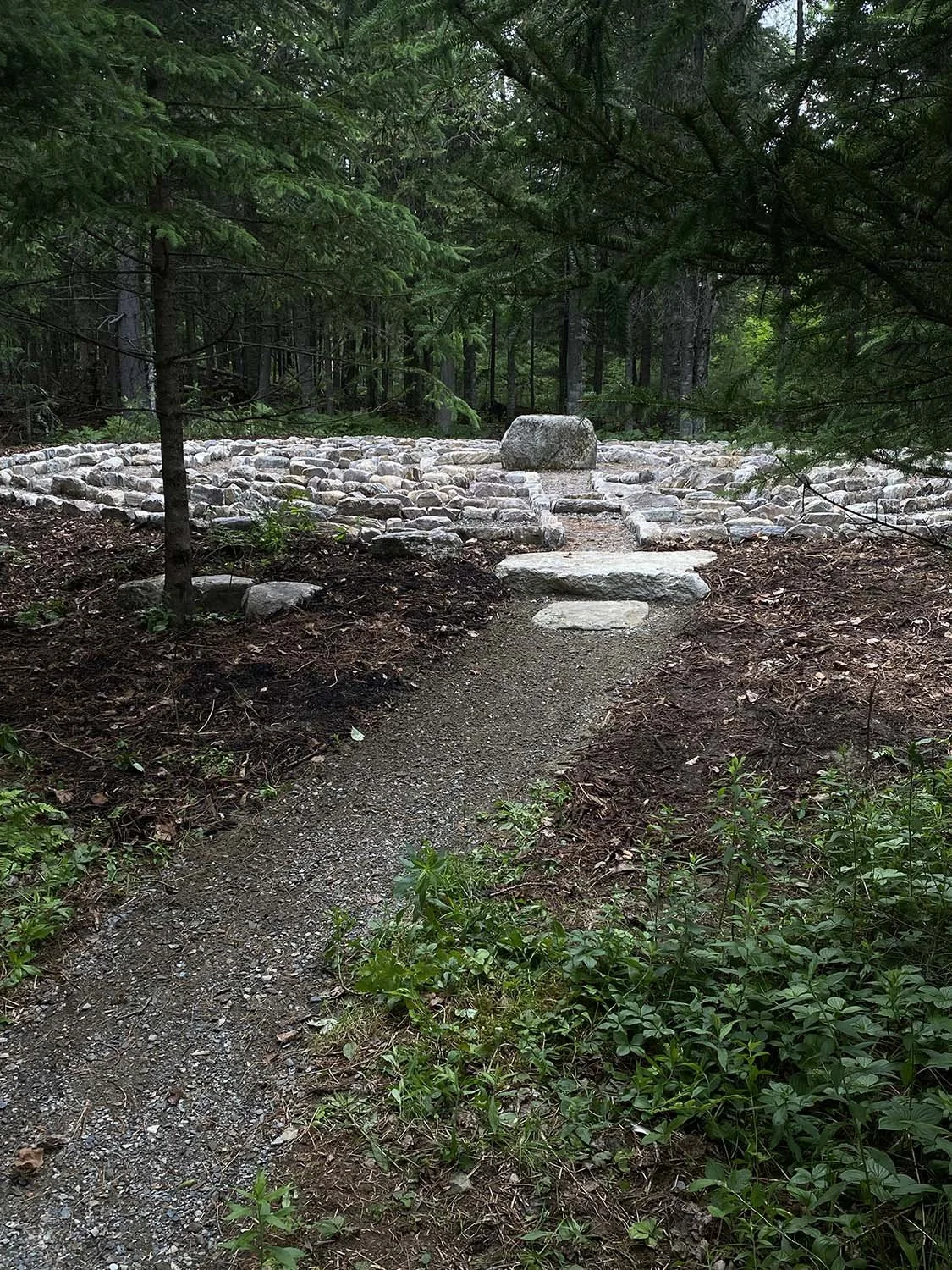
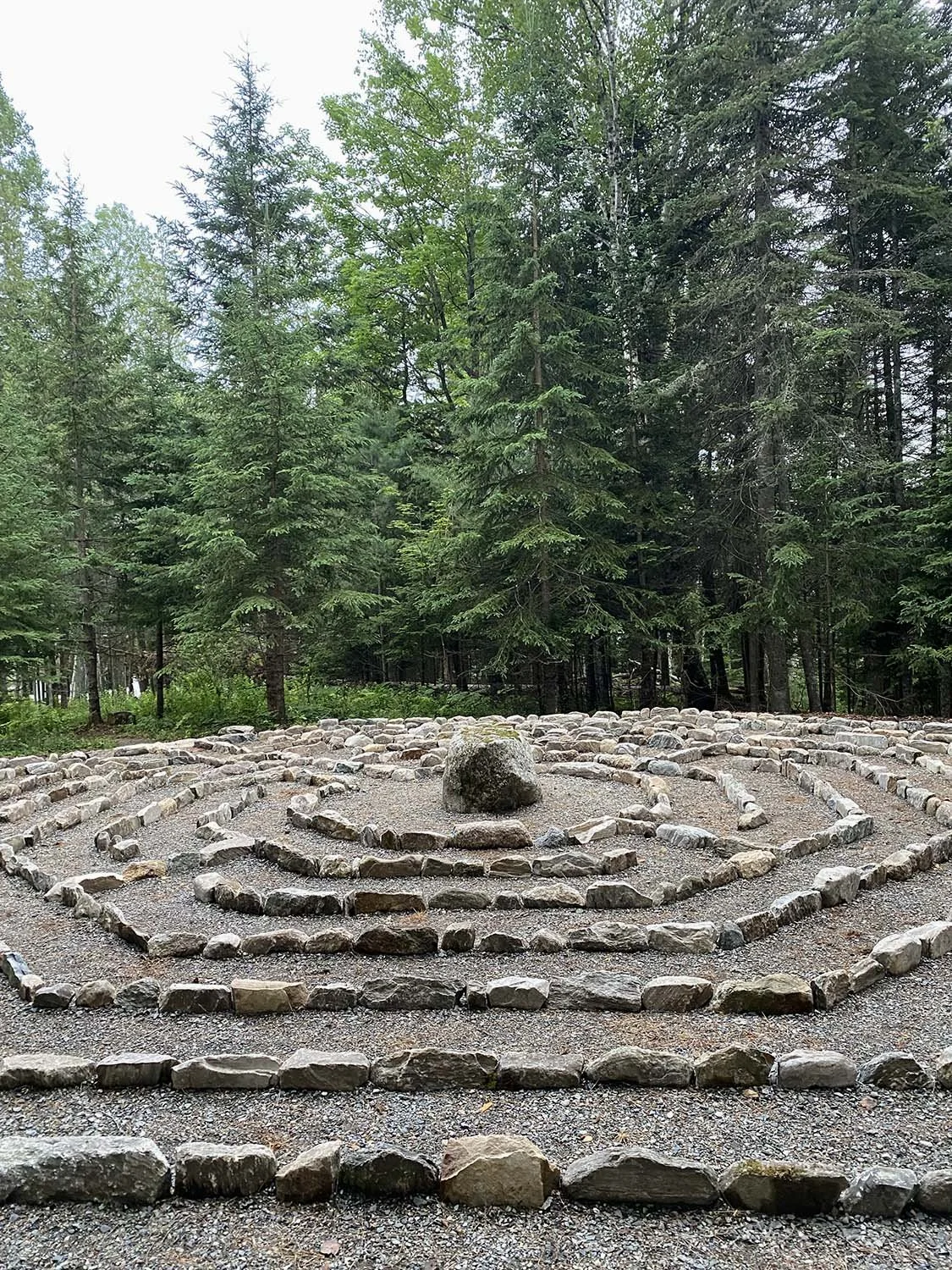
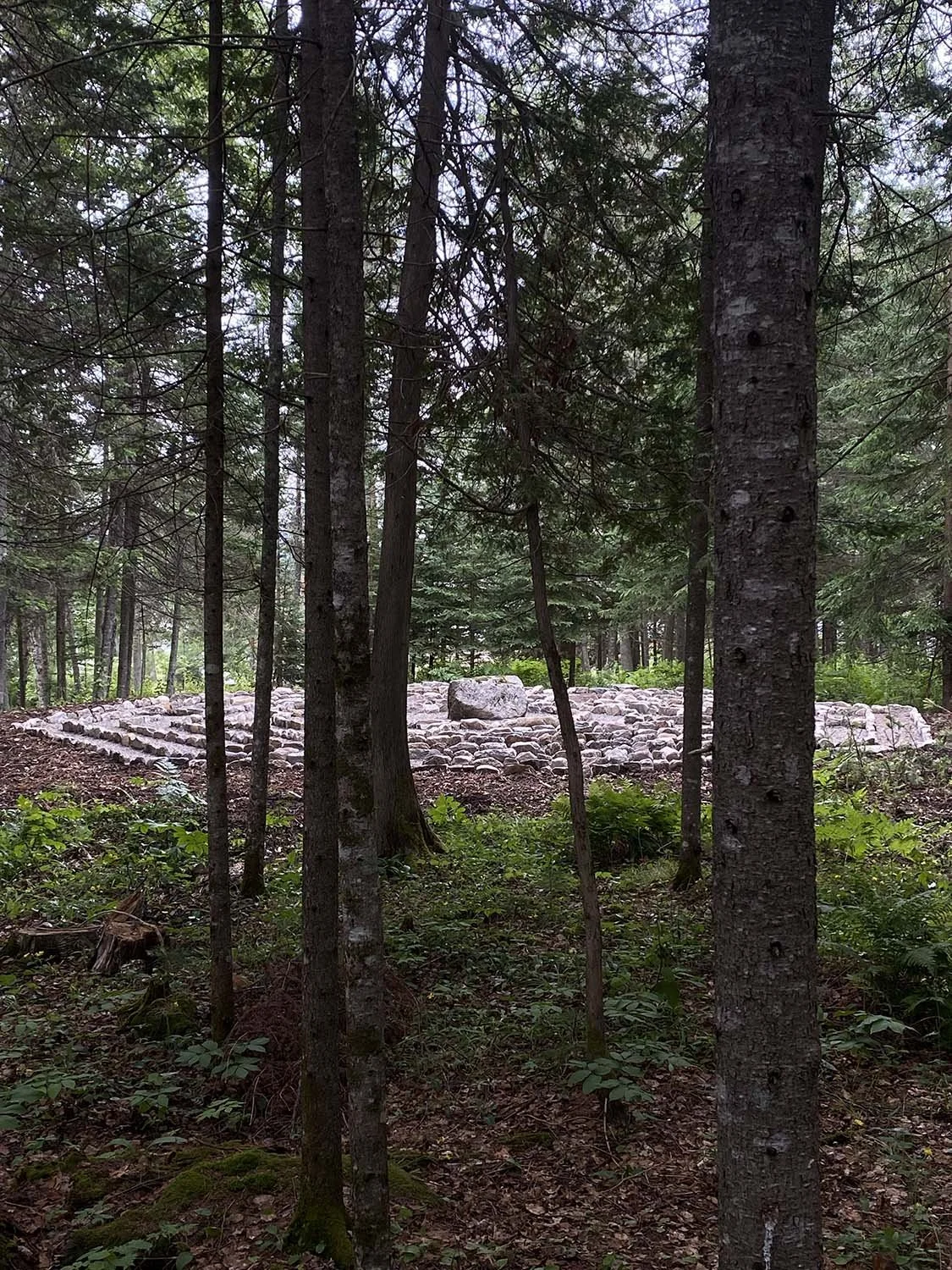
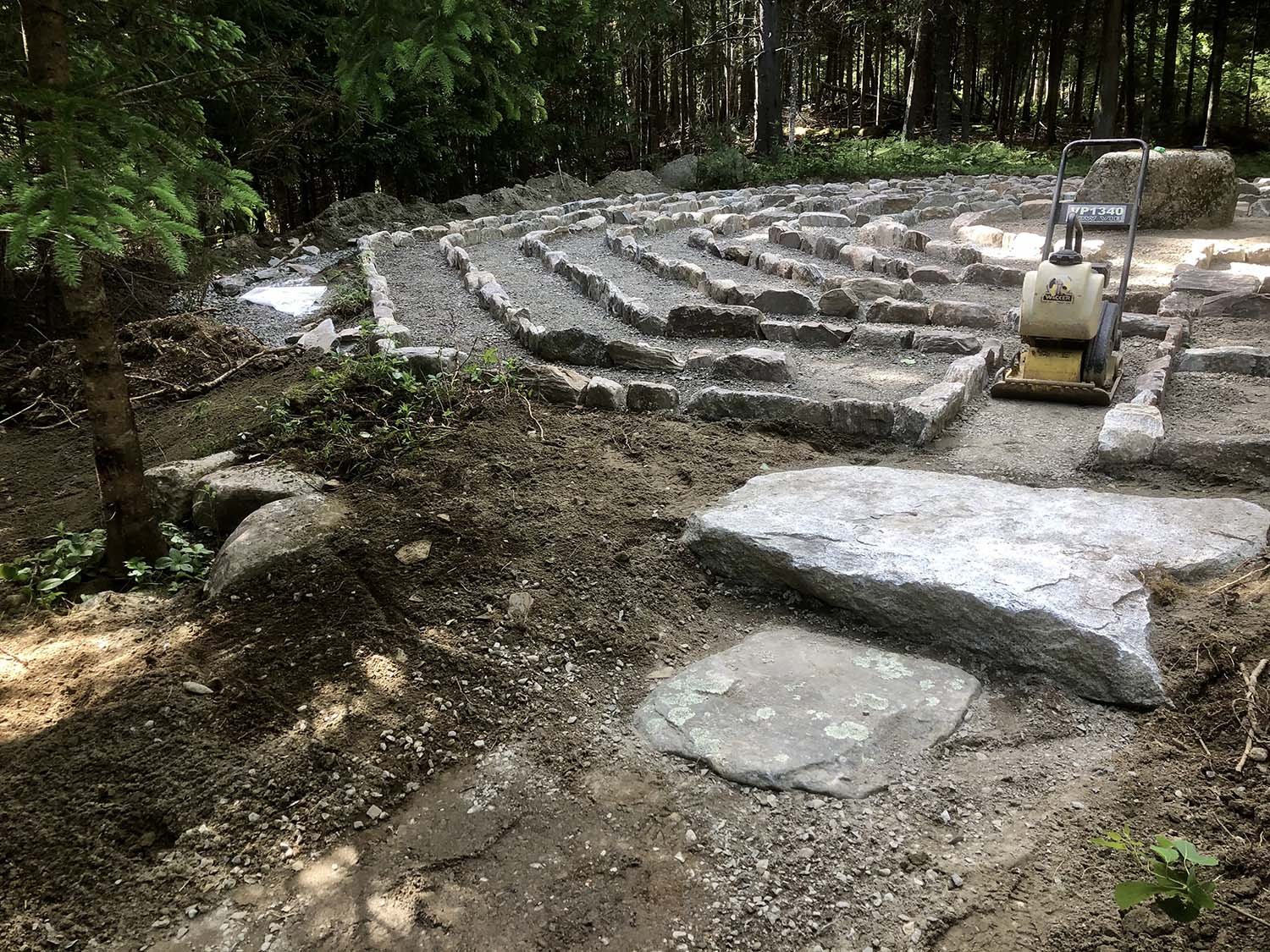
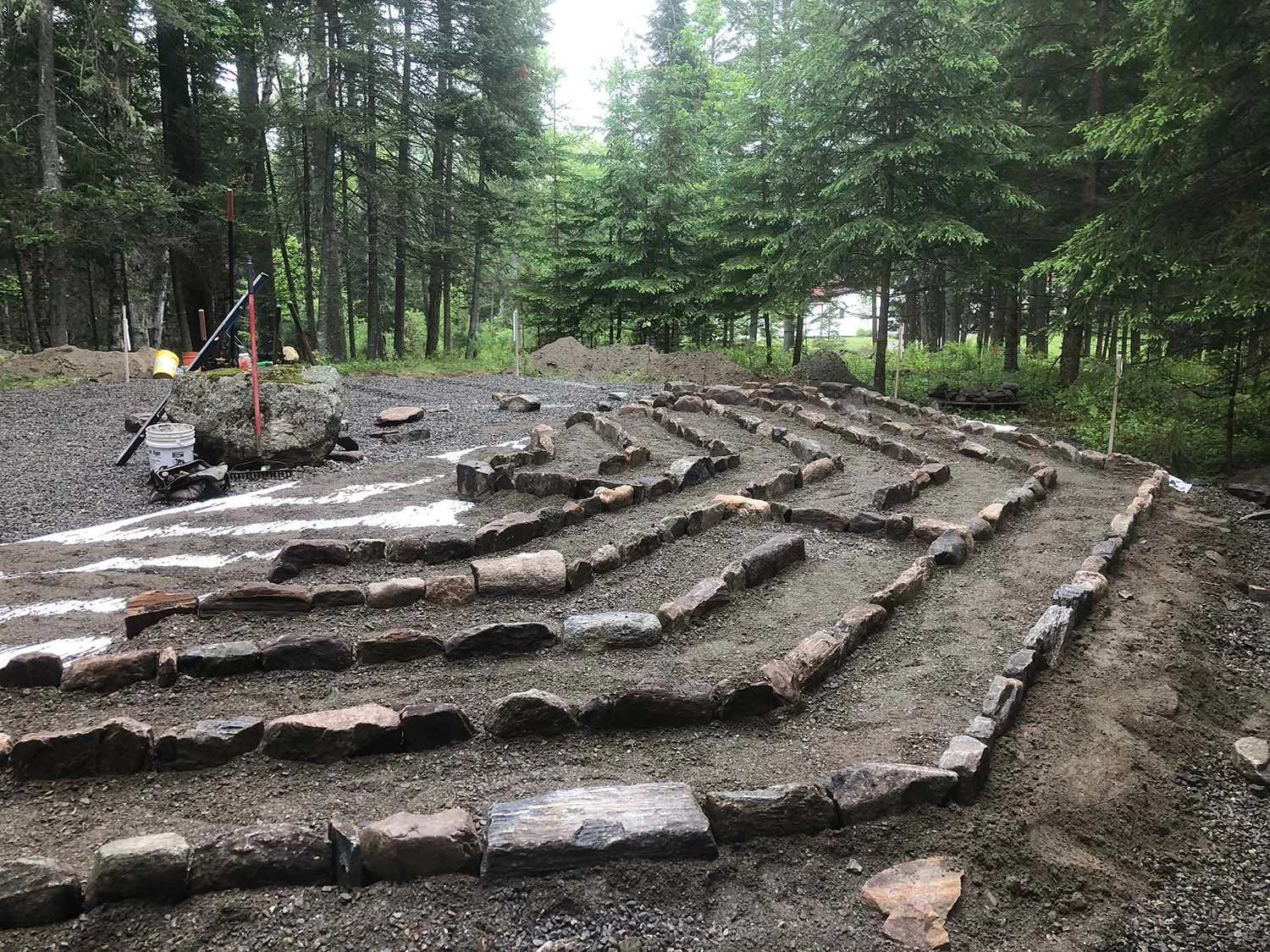
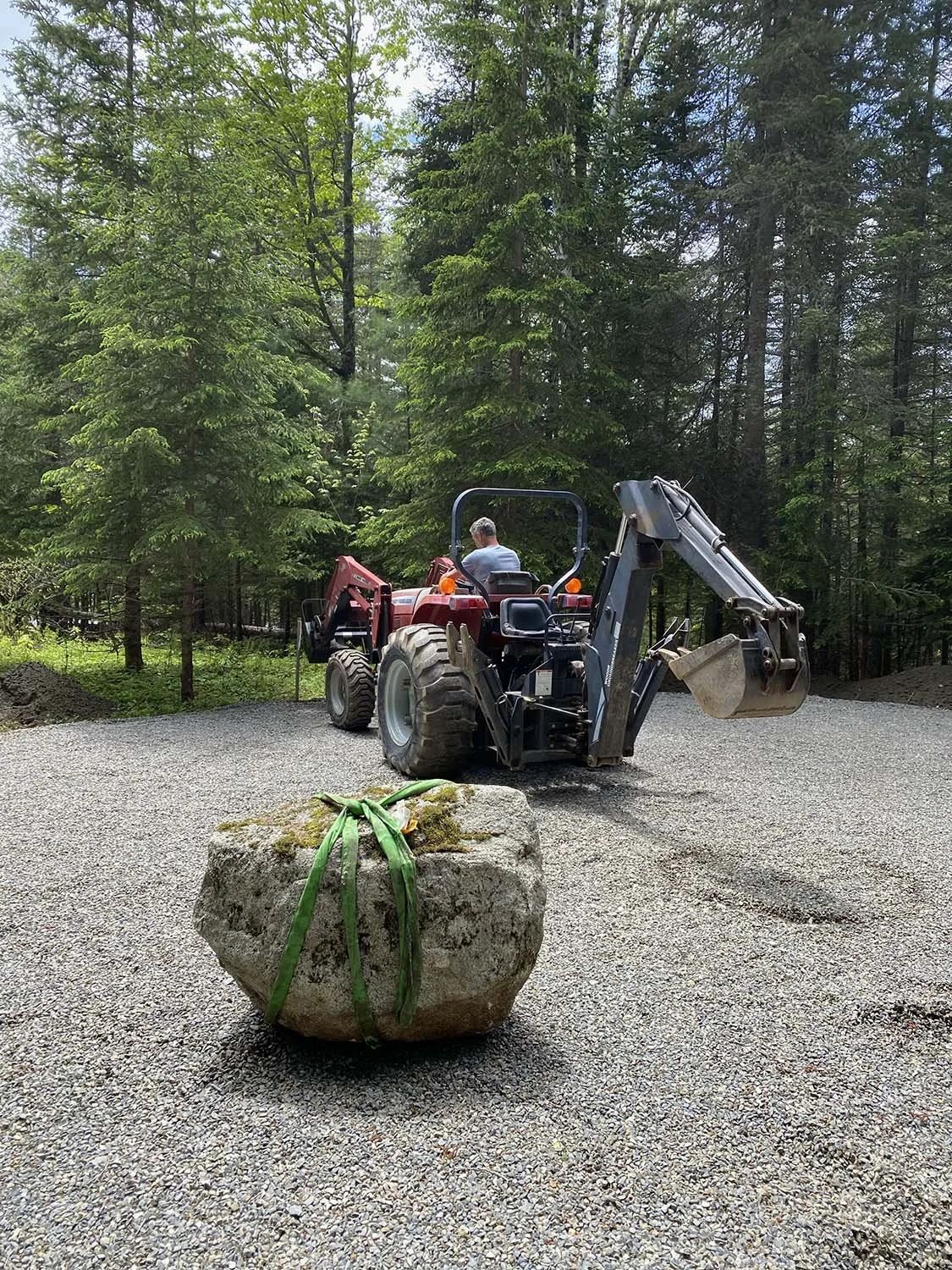
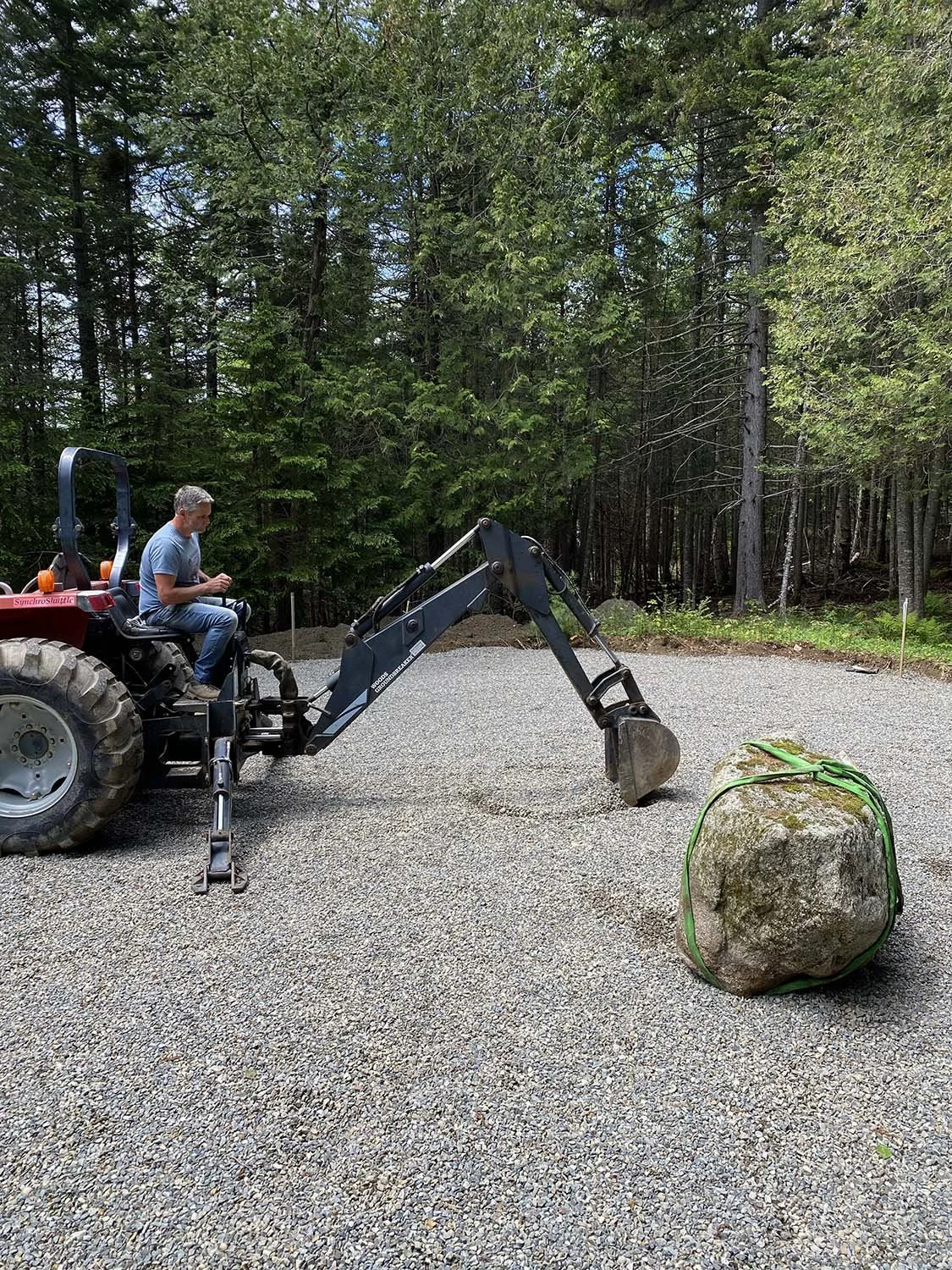
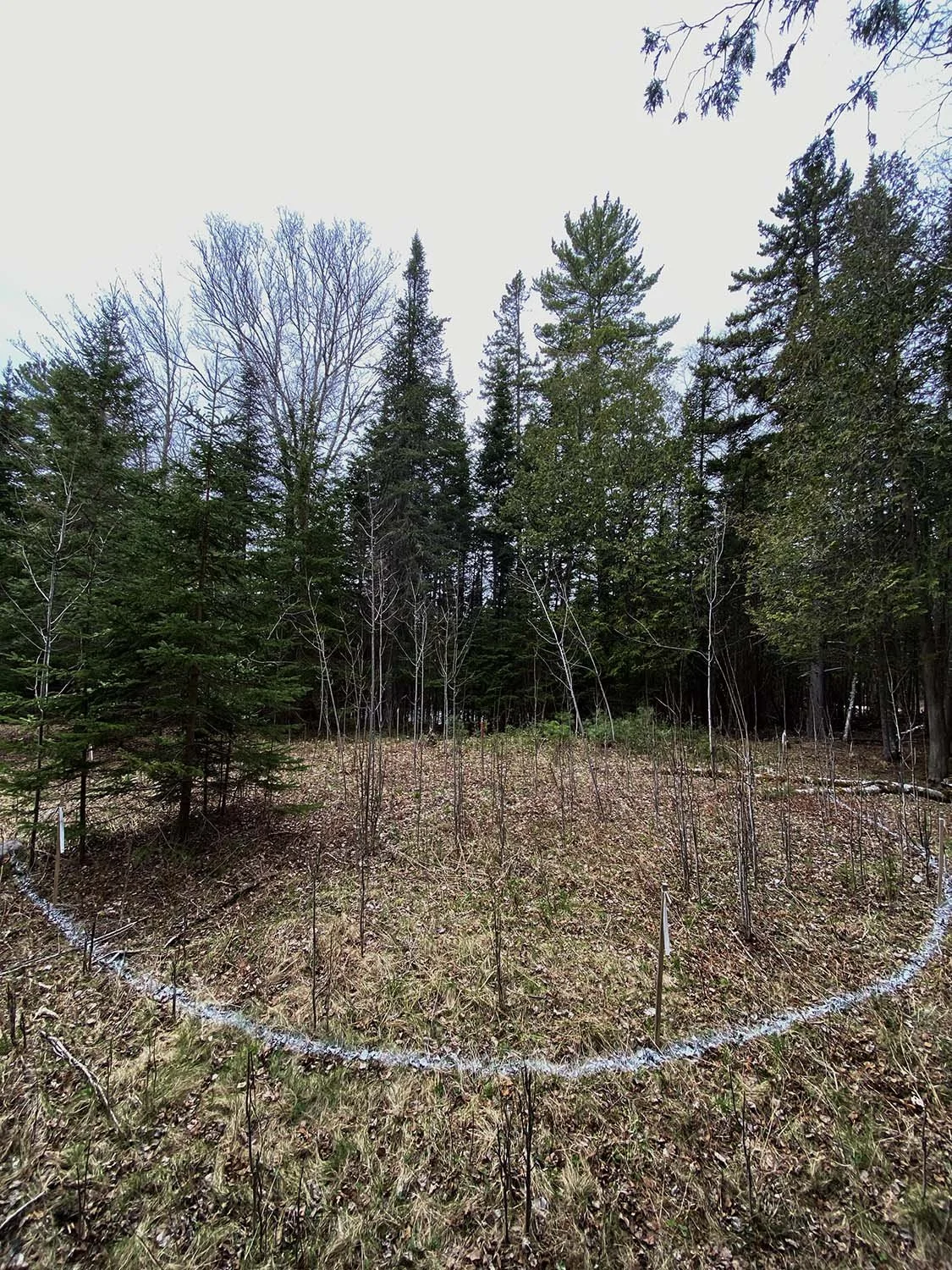
A clearing in the forest from an old decommissioned wastewater disposal field. White paint marks the perimeter of the labyrinth project.

MARINA ROAD / A Landscape Makeover Awakens a Maine Home
The original 1840 Cape was sited in close proximity to a hillside dirt lane, connecting with maritime activities below and with the town above. Subsequent additions to the house were built along the roadway, forming a long, narrow home with a long, narrow front yard. This yard, wedged between roadway and house, marked the site of a complete landscape transformation.
Within the yard, spaces were poorly arranged and landscape materials were tired or in disrepair. Overgrown plantings were clogging space and masking the appearance of the distinctive home. A dysfunctional landscape was overdue for a functional and aesthetic makeover.
The first objective toward this end was the complete demolition of the old landscape. Short rock walls, serving little purpose, were removed. Brick walkways, poorly arranged and in decline, were removed. Plant beds, consisting of fussy assortments of plantings, were removed. A mature maple, diseased and in decline, and contributing to an overall shady, damp space, was removed. A rotting picket fence was removed. A spatially constrained space was now a tabula rasa — open, free, and full of light. A house hiding behind things was awakening. The physical reality of its street side location was being acknowledged again.
Taking advantage of a cleared site, and before the new landscape was developed, practical issues related to grading and drainage were addressed and improved. Foundation repairs, waterproofing, and new skirt boards were installed around the exterior of the house.
The primary goal of the new landscape was to strengthen its relationship with the existing house. The new landscape took cues from, and closely related to, the clean, simple lines of the house. Quarried granite was tailored to size for each unique location. A large, granite bench was centered on the house transom windows above. Stoops were split to each specific doorway width. A cedar board fence echos the clapboard siding and elongated shape of the house. A pair of pewter onion light fixtures flank the front door and define the main, formal entrance. A single fixture was added at the informal doorway at the middle of the house. House and landscape melded into a single expression. A synergy, between house and landscape, was born.
Employing a simple palette of materials with purpose, spatial and material harmony was achieved. A blanket of crushed stone was infilled throughout the space between house and curb. There are no plant beds. A single source of granite was used for everything — Stoops, bench, step, and retaining blocks. Trees, Quercus robur x bicolor ‘Long’ (Regal Prince Oak), were selected for their columnar form, conserving space. The trees were strategically located forming the edges of a central, open, unprogrammed gathering space. Space was tailored and reserved for a charcoal Weber grill. Whether viewed from inside the house, while passing by, or while occupied, the materials and space of the landscape are expressed as sculpture.
Photography by Joshua Tompkins
Demolition and Excavation by Scott Dugas
Tree Removal by Whitney Tree Service
Foundation Repairs by Green Island Stonework
Skirt Boards and Waterproofing by Sean Beote Construction
Zinc Gutter and Downspout by Vertex
Landscape Installation by SKB Contracting
Granite Quarry and Fabrication by Sullivan Granite Co.
Granite delivery by Cowboy Jim Bacon
Trees by Pierson Nurseries
Fencing by Main Line Fence
Electrical by Landry Electric
Wall Lanterns by The Nauset Lantern Shop
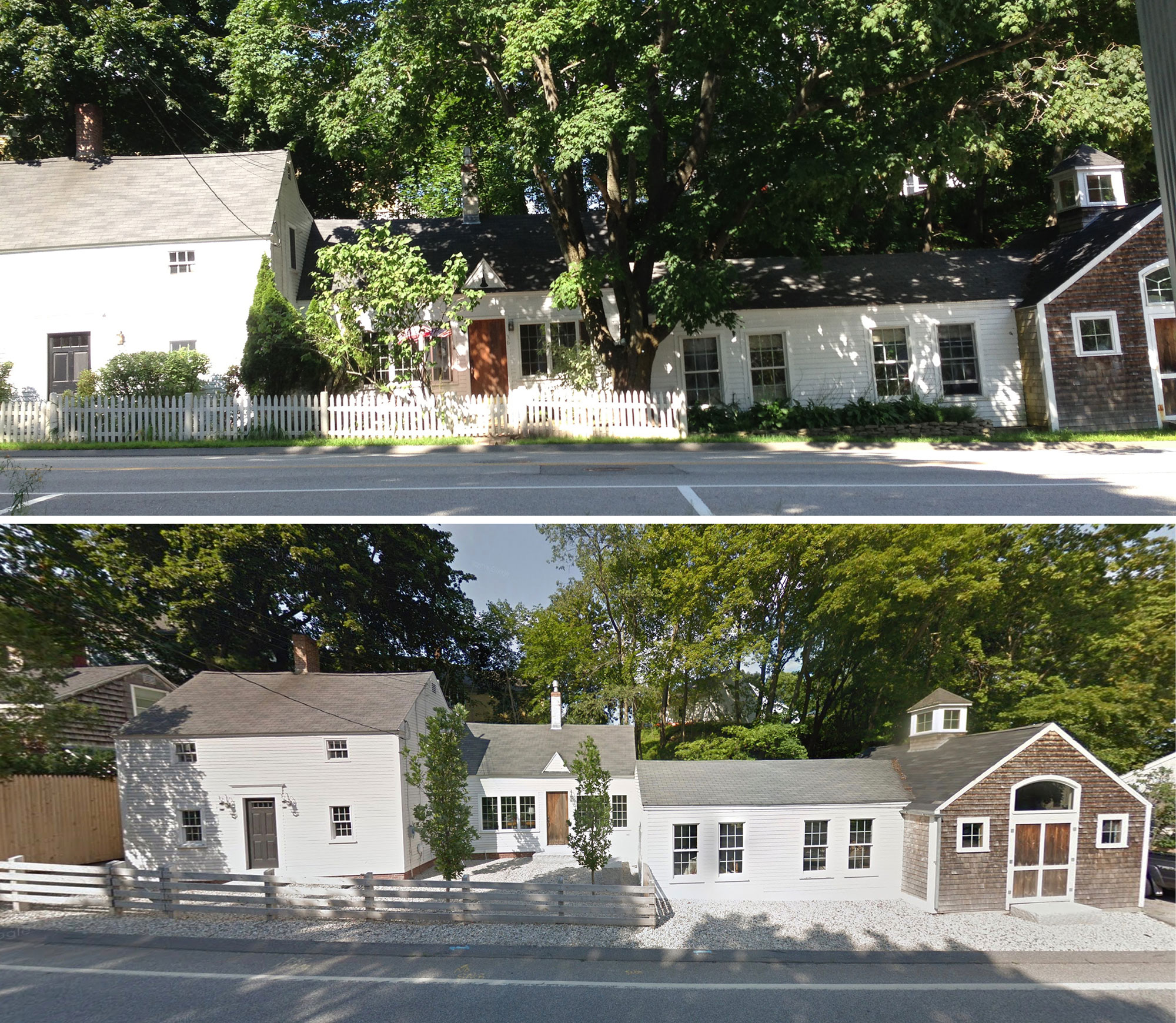
Before / After

Before / After
Simple, honest landscape materials. Split granite bench, unfinished cedar fence, and trees.

Horizontal board fence located parallel to roadway provides safety from the road while allowing light to pass through.

A pair of pewter onion lanterns flank the formal entrance to the 1840 Cape.

Shake shingled studio.

Before Construction

JUDITH CREEK / A Swimming Pool in Harmony with its Setting
Photography by Joshua Tompkins
A swimming pool was conceived at an existing, historic farmhouse property of rolling hills and mature trees.
The success of the project was due, in part, through the well–considered siting of the pool. A balanced spatial relationship between house and pool was achieved. On one hand, the pool is located convenient to and on axis with the outdoor terrace. On the other hand, the pool is detached from the terrace and is part of the landscape — It is surrounded entirely by green lawn and at a lower elevation than the outdoor terrace.
Employing an economy of materials, the pool lives quietly and is in harmony with the surroundings. An antiqued bluestone pool deck surrounds the pool providing just the width for a comfortable walking space — No more and no less. The poolside chaise lounge area is located on lawn for a softer alternative to stone.
The swimming pool doubles as a reflective pool. Features common with pools — Handrails, grab bars, diving boards — were all eliminated in favor of a simple, serene composition. A dark interior pool finish fits the language of the farmhouse property and amplifies its reflective qualities, drawing in the sky above.

A balanced spatial relationship between house and pool.

Surrounded entirely by lawn, the pool rests lightly on the landscape.

Historic lamps, salvaged from the streets of Berlin, bring character and sophistication to the outdoor space.

A dark, recessive interior pool finish fits the language of the farmhouse property.
MERE POINT / A modern house engages in reciprocity with a designed landscape
with Richardson & Associates architecture by Carol A. Wilson Architect
This residential project seamlessly integrates a multi–functional outdoor gathering space with modern architecture and a client’s modern lifestyle. An distinctive house of impressive verticality was carefully studied and guided the direction of the project. A collaborative and iterative design process with the client was instrumental to this achievement.
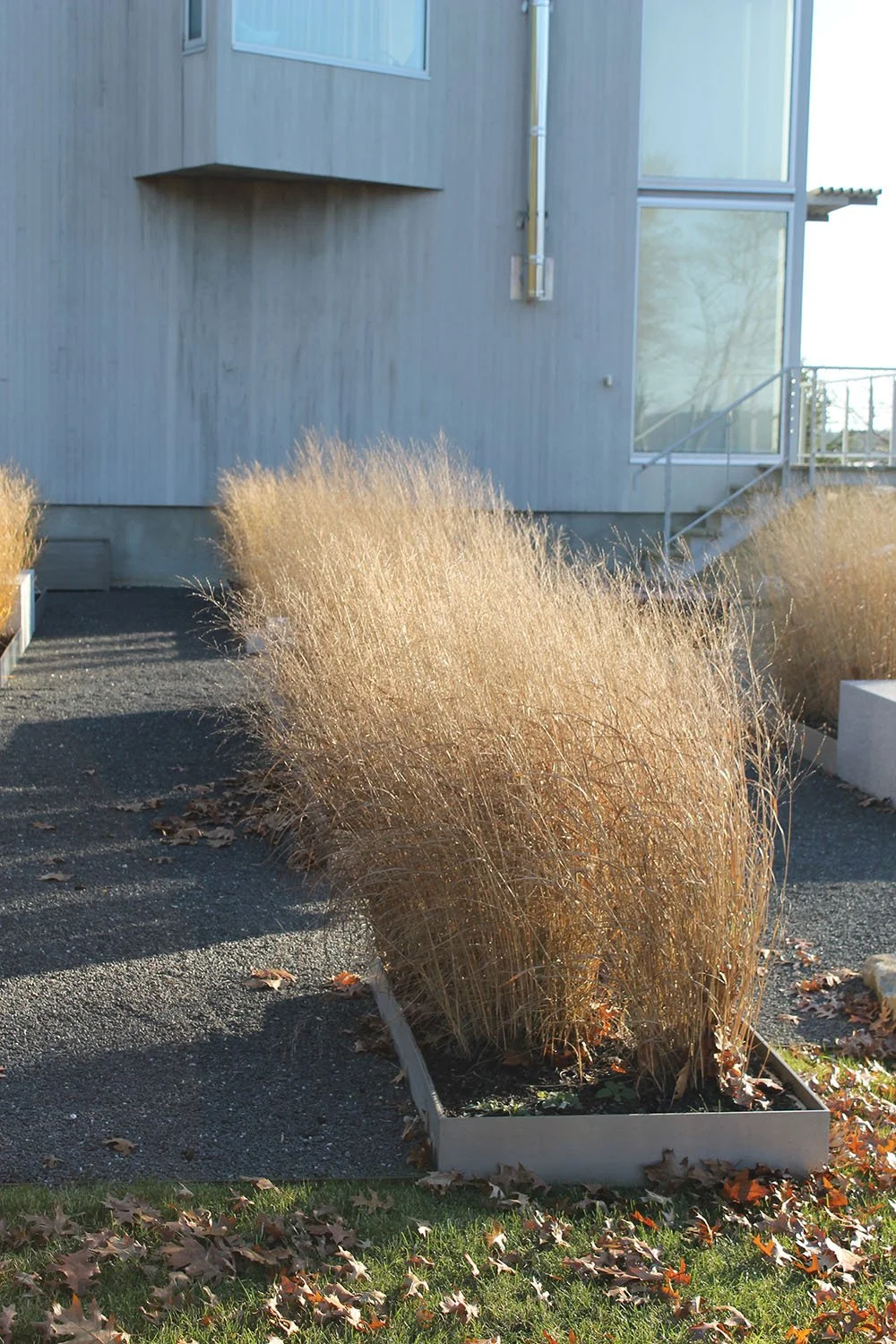
As a key first step to the spatial integration of the old with the new, a stone wall was located at the back of house, of the same character and on same geometric plane, as an existing wall at the front of house. Driven by a modern aesthetic, terrace spaces — fire table gathering, dining, lounging, grilling — are defined but not constrained. Long rectangles of planters and granite blocks define spatial edges, while breaking at key locations, maintaining fluid circulation throughout the terrace. Within the stainless steel planters, cultivars of either Panicum virgatum ‘Northwind’ or Panicum virgatum ‘Heavy Metal’ switch grass were planted, forming semi-permeable screens. LED strip lights wrap the interior of the planters, softly illuminating the wispy grasses. Salvaged granite, repurposed as outdoor sculpture, links the terrace and Bay.
Strongly influenced by a modern aesthetic — spatial ordering, clean geometry and the juxtaposition of materials — the senses are heightened. The sculptural qualities of the terrace, either viewed from within the home or while occupied, is fully realized through four seasons, day and night.
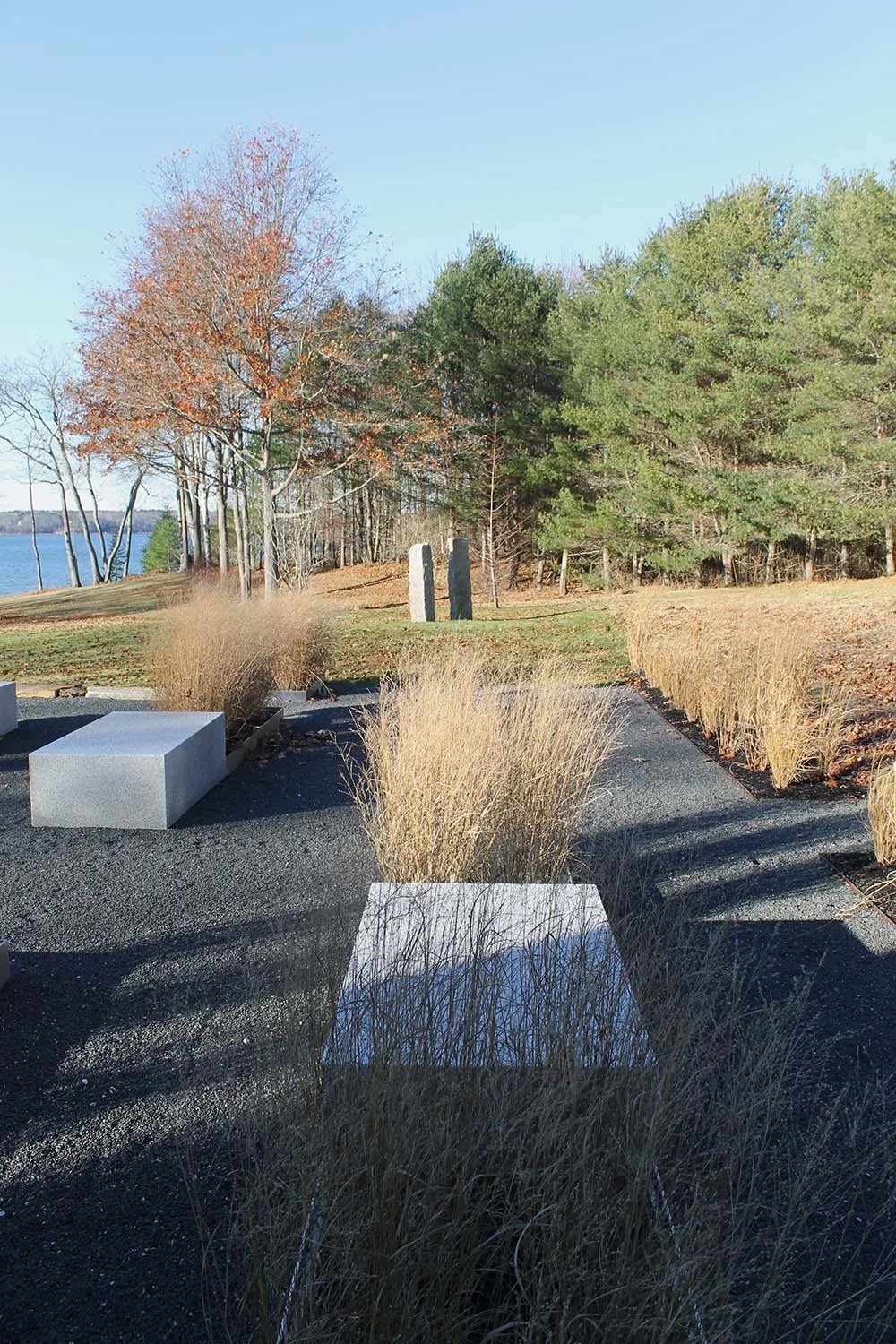
Orthogonal geometry of the terrace was strongly influenced by the existing home.
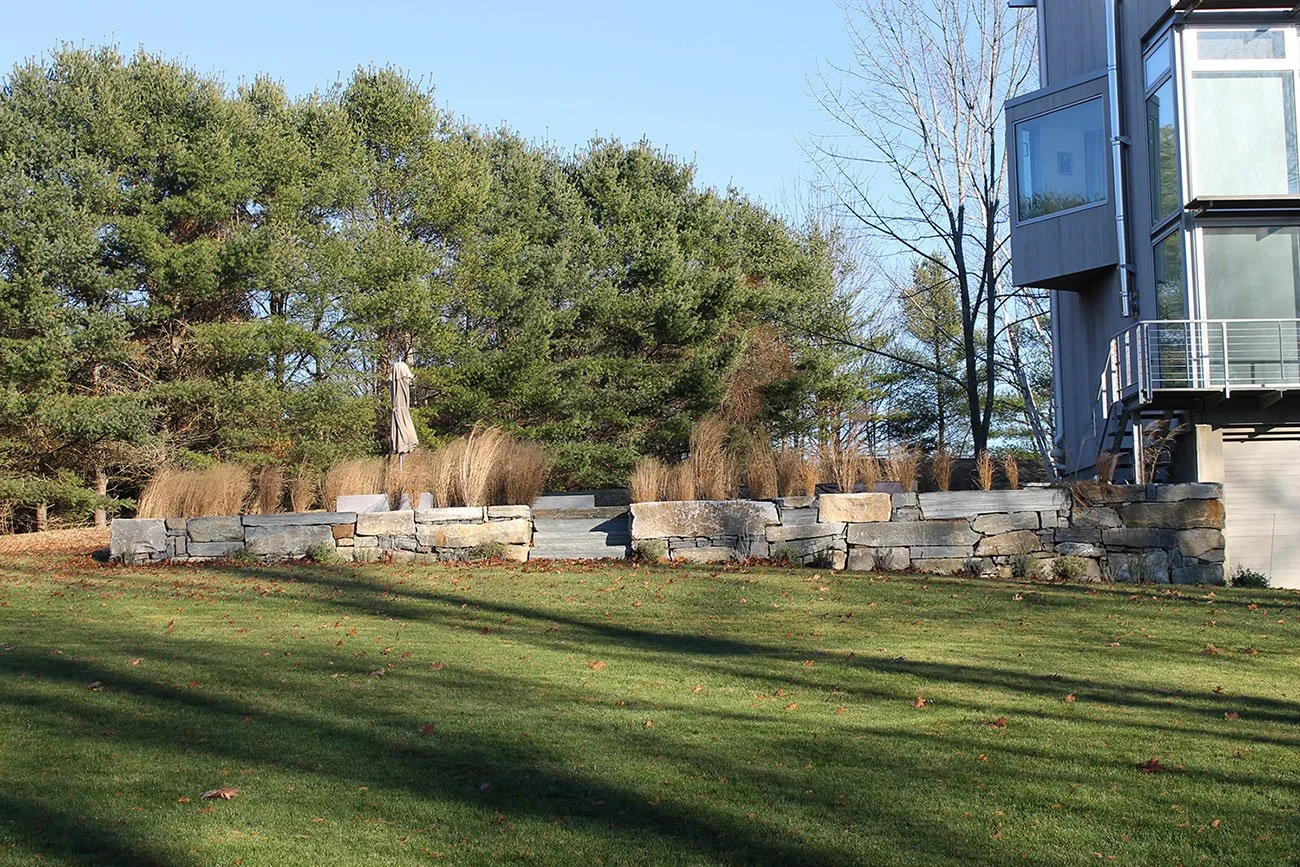
A fieldstone wall unifies the front and back of house while retaining earth for a terrace.
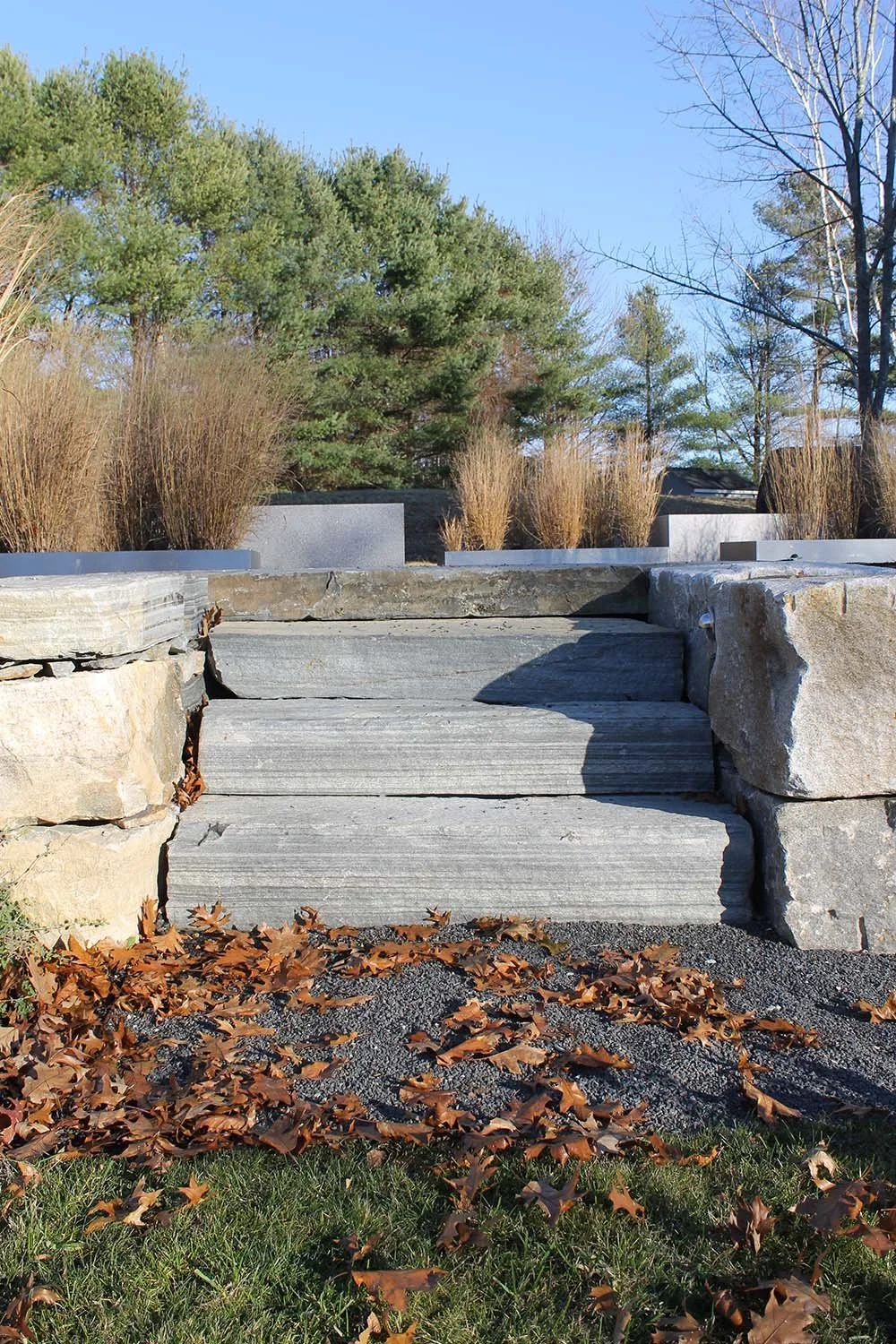
A break in the wall connects footpath with terrace.
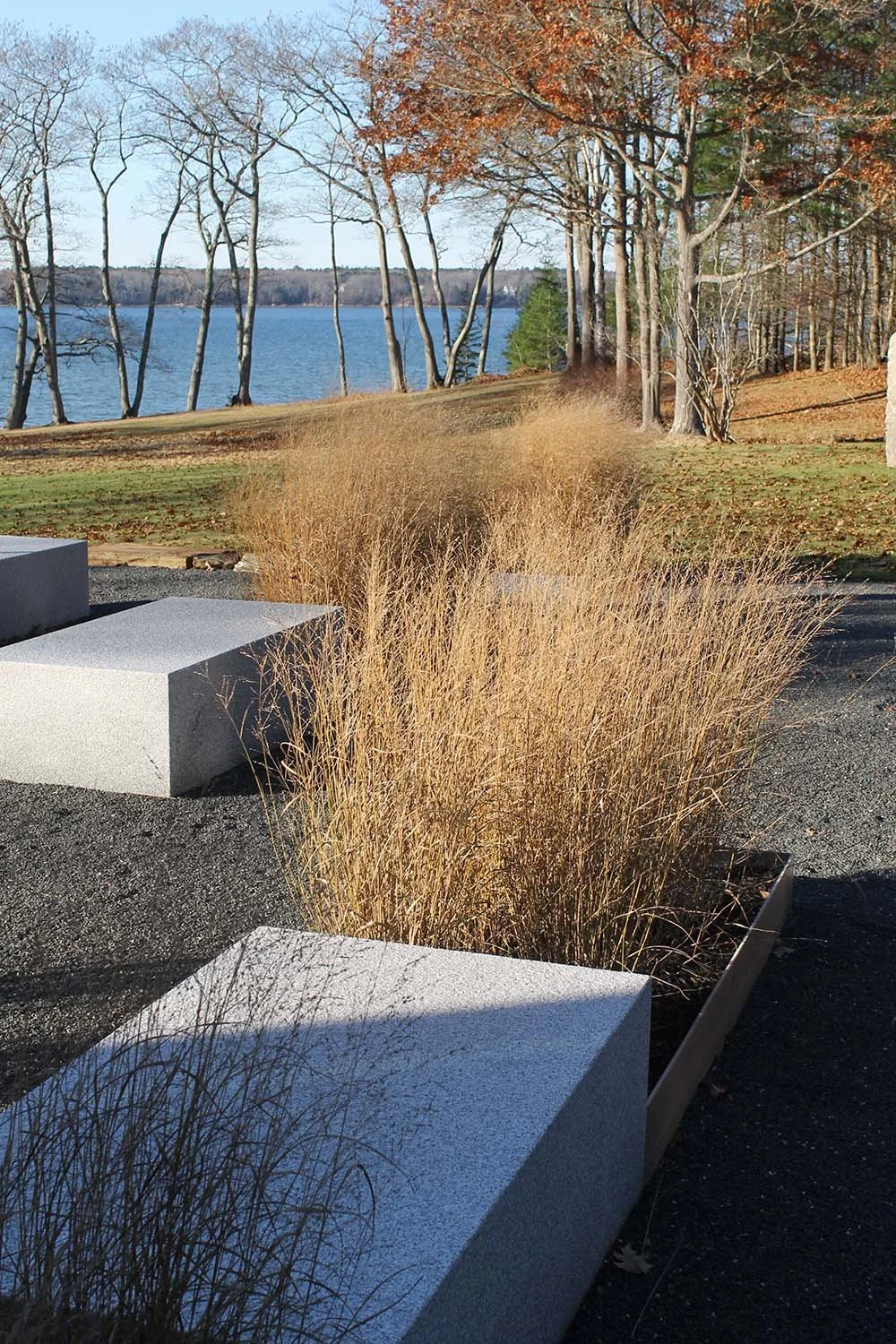
Whimsy grasses play counterpoint to the structure and heft of granite blocks.
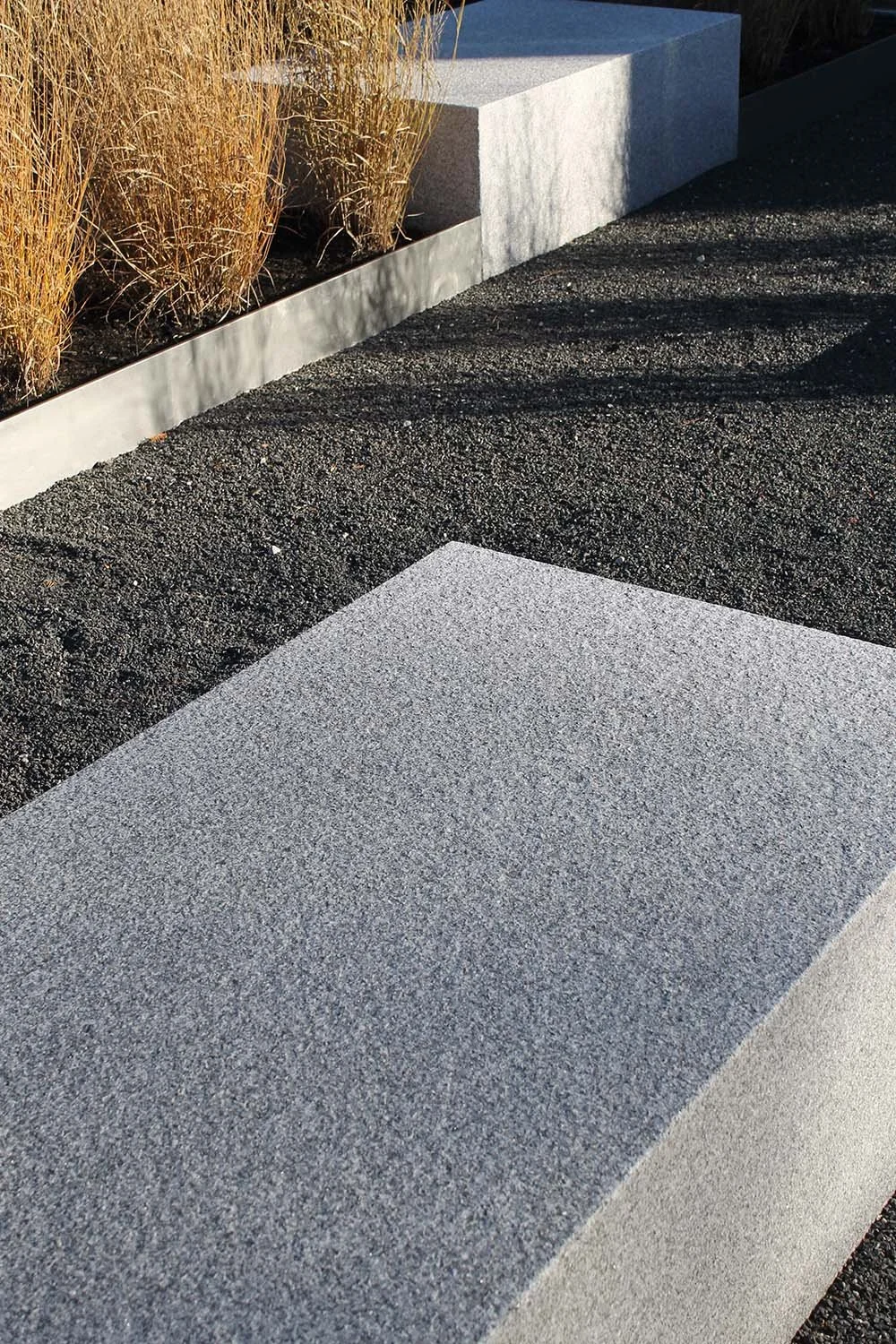
Clean, crisp lines.
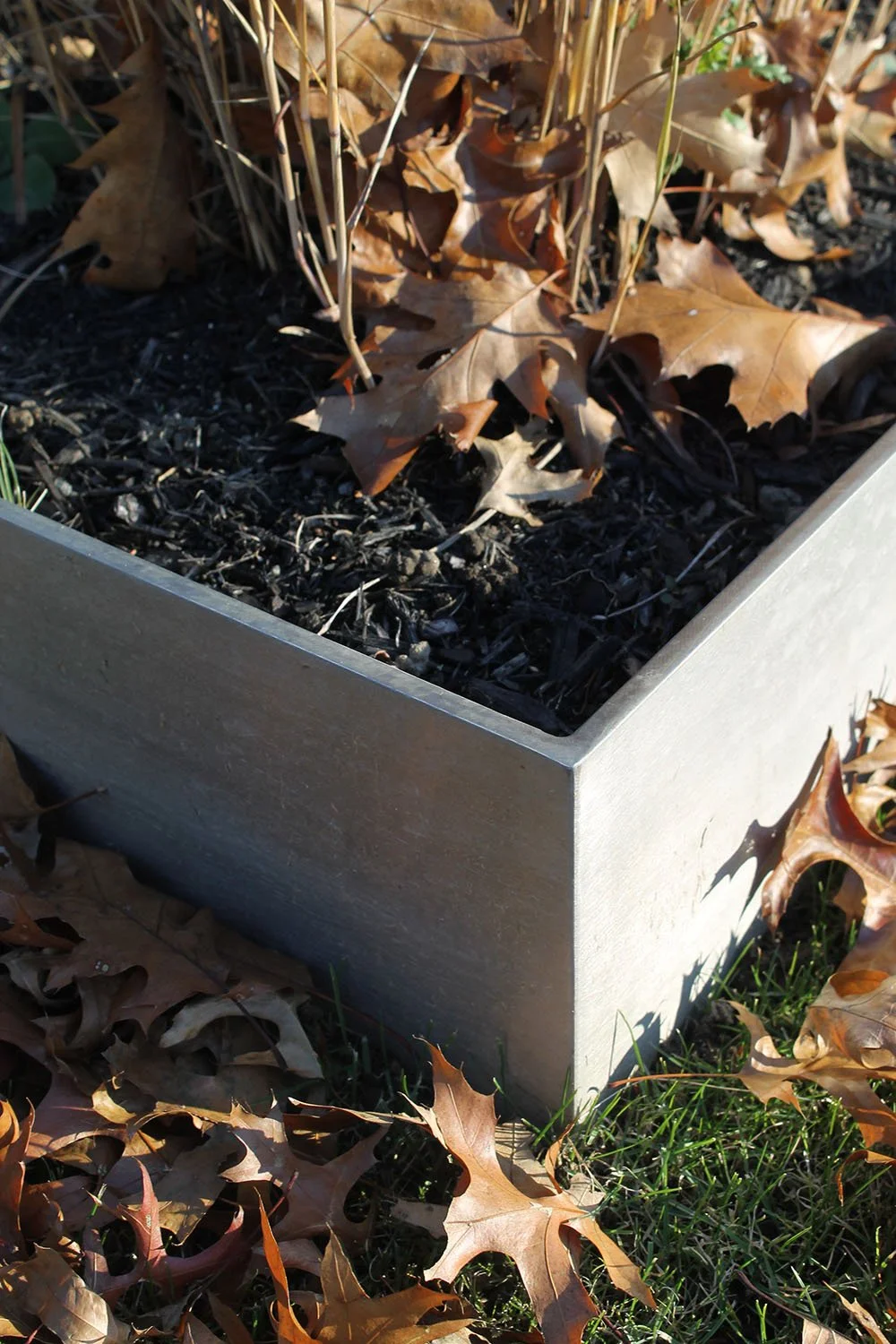
The crisp corners and luster of stainless steel planters.
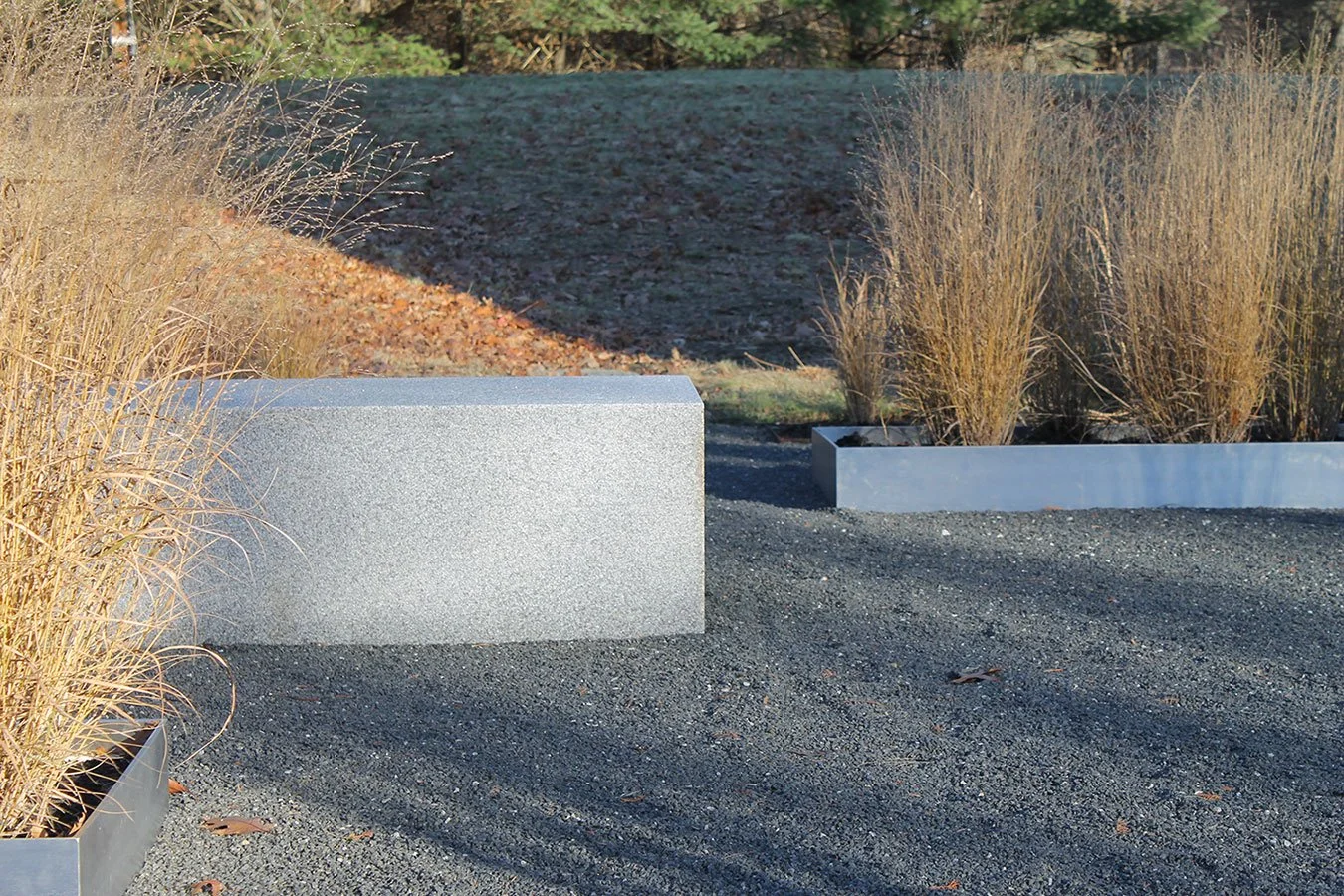
A strong sense of materiality pervades.

Airy seed heads.
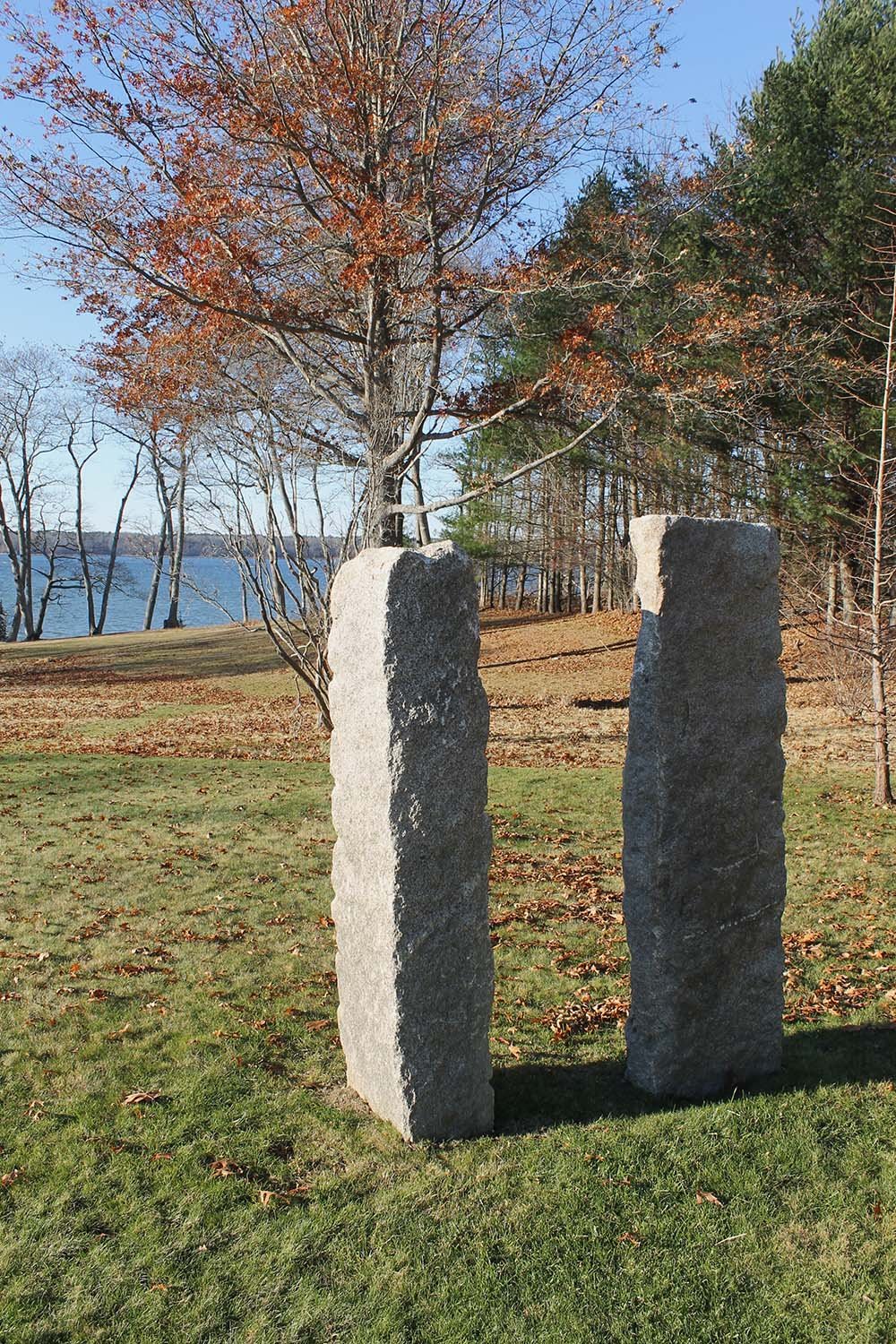
Stone sculpture draws the eye out into the landscape.
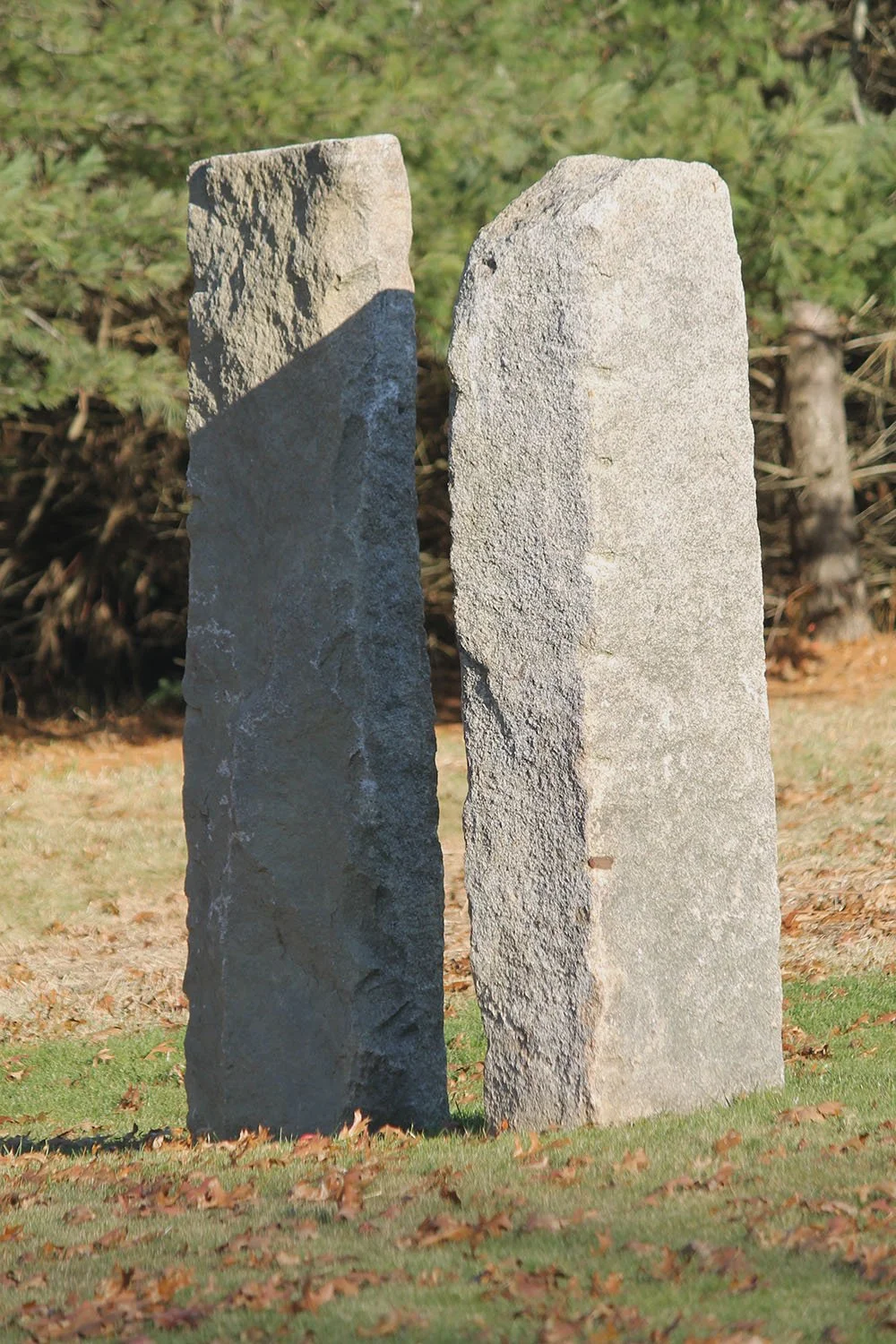
Reclaimed granite sculpture and the play of shadow and light.
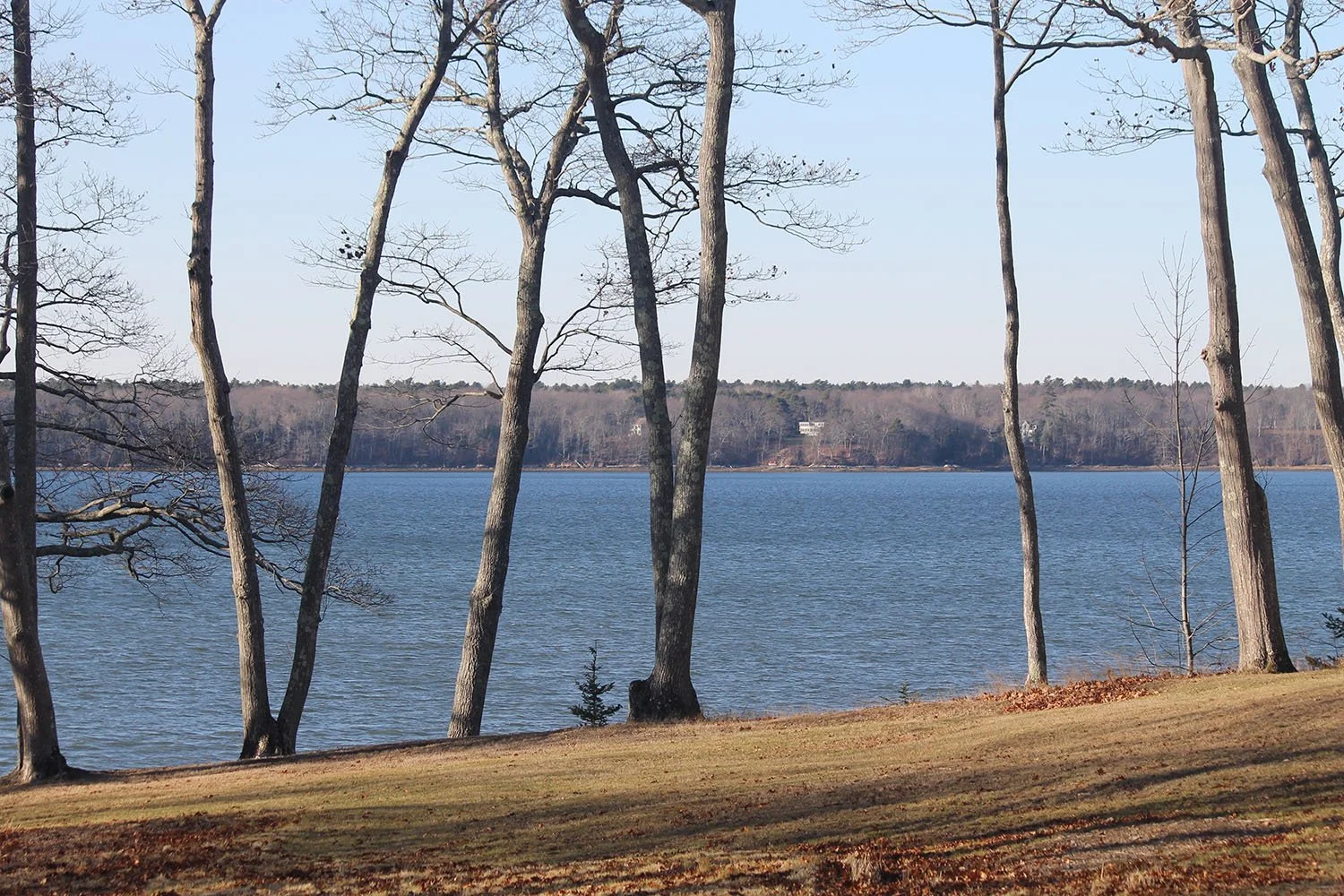
View to the bay.
OTHER PROJECTS
Arts
Kauffman Center for the Performing Arts
Kansas City, Missouri
(Landscape Designer involvement with Reed Hilderbrand LLC)
Campus
Kate Furbish Elementary School
Brunswick, Maine
Piper Shores Retirement Community
Scarborough, Maine
(Project Landscape Architect with Richardson & Associates)
Salve Regina University
Newport, Rhode Island
(Project Landscape Designer with Katherine Field & Associates)
Historic Grounds
The Blaine House
National Historic Landmark / Augusta, Maine
(Project Landscape Architect with Richardson & Associates)
O.M. Whipple Columbarium & Garden of Remembrance
Lowell Cemetery / National Register of Historic Places / Lowell, Massachusetts
(Project Landscape Architect with Richardson & Associates)
Beechwood Museum and Gardens
Bellevue Avenue Historic District / Newport, Rhode Island
(Project Landscape Designer with Katherine Field & Associates)
Parks
Trinity Park Portland, Maine
Residential
Maine and throughout New England
Urban Planning and Design
Market Street Gateway
Portsmouth, New Hampshire
(Project Landscape Architect with Richardson & Associates)
Northeast Harbor Village Plan
Northeast Harbor, Maine
(Project Landscape Architect with Richardson & Associates)
LATCHSTRING PARK
PROUTS NECK
INDIAN POINT
FERN WOODS
FIR PATH
LITTLE RIVER
POJAC POINT
QUOSSOC
MARINA ROAD
JUDITH CREEK
MERE POINT
OTHER PROJECTS